5 Best Cheap eSIM Options for 2025
Written By:
Umi
TL;DR: Cheap eSIMs in 2026, and Why the Lowest Price Can Cost You
The cheapest eSIM is not always the one that keeps you online. Sticker price hides the trade-offs that matter when you actually need data.
Rock-bottom plans often ride secondary networks, throttle hard after a daily cap, or expire the moment your trip shifts.
Judge value on reliability and price per GB together, not the headline number alone.
Umi sits in the sweet spot: pay-as-you-go from $2.55 per GB on premium networks that never throttle, with a balance that never expires.
You buy the cheapest eSIM you can find, land in a new city, and the maps app spins. The plan technically works, but it crawls at peak hours, the hotspot is capped, and the data you did not use expires in three days. Cheap, it turns out, has a cost.
This guide explains where cheap eSIMs cut corners, how to spot the trade-offs before you buy, and which plans hold up. The goal is value, not the lowest possible number.
Why the Cheapest eSIM Often Lets You Down
A low price has to come from somewhere. With travel eSIMs, the savings usually come out of reliability, in ways you only notice once you are abroad and depending on the connection.
Secondary networks and congestion. Budget resellers often buy lower-priority access on a local network. Your data works, until peak hours, when paying customers on that network get served first and your speeds drop.
Aggressive throttling. Many cheap "unlimited" plans are not uncapped. They slow to a near-unusable speed after a daily threshold, so the plan looks generous on paper and stalls in practice. Hotspot caps stack on top of that.
Single-use plans that expire. Most budget eSIMs are throwaway: data runs out or the days end, and whatever you paid for vanishes with no rollover. A delayed flight or a changed itinerary turns into wasted money.
Coverage gaps. A cheap plan tied to one network can be strong in cities and thin in rural areas, which is exactly where you most want a signal.
Support and activation. Thin-margin resellers tend to have thin support. When an activation fails at 11pm in a foreign airport, slow help is its own cost.
None of this means every cheap eSIM is bad. It means the headline price tells you almost nothing about whether the plan will hold up. For the wider context, this eSIM market analysis covers how fast the space is growing and crowding.
What "Cheap" Should Actually Mean
Value is price per GB plus reliability, not the smallest number at checkout. A cheap plan that throttles to a crawl after a daily cap is not cheaper than one that costs a little more and stays fast, once you count the hour you lose to a stalled connection.
Before you buy, weigh four things: the real price per usable GB, the throttling and hotspot policy in the fine print, whether unused data expires, and the network quality behind the plan. If you are choosing between an eSIM and a local SIM, the eSIM vs physical SIM guide is a good start.
4 eSIMs for Budget Travelers, and Their Trade-Offs
Here are five plans travelers reach for on a budget, framed by the catch that decides whether each is a bargain or a false economy.
Umi: Reliable Data Without Overpaying
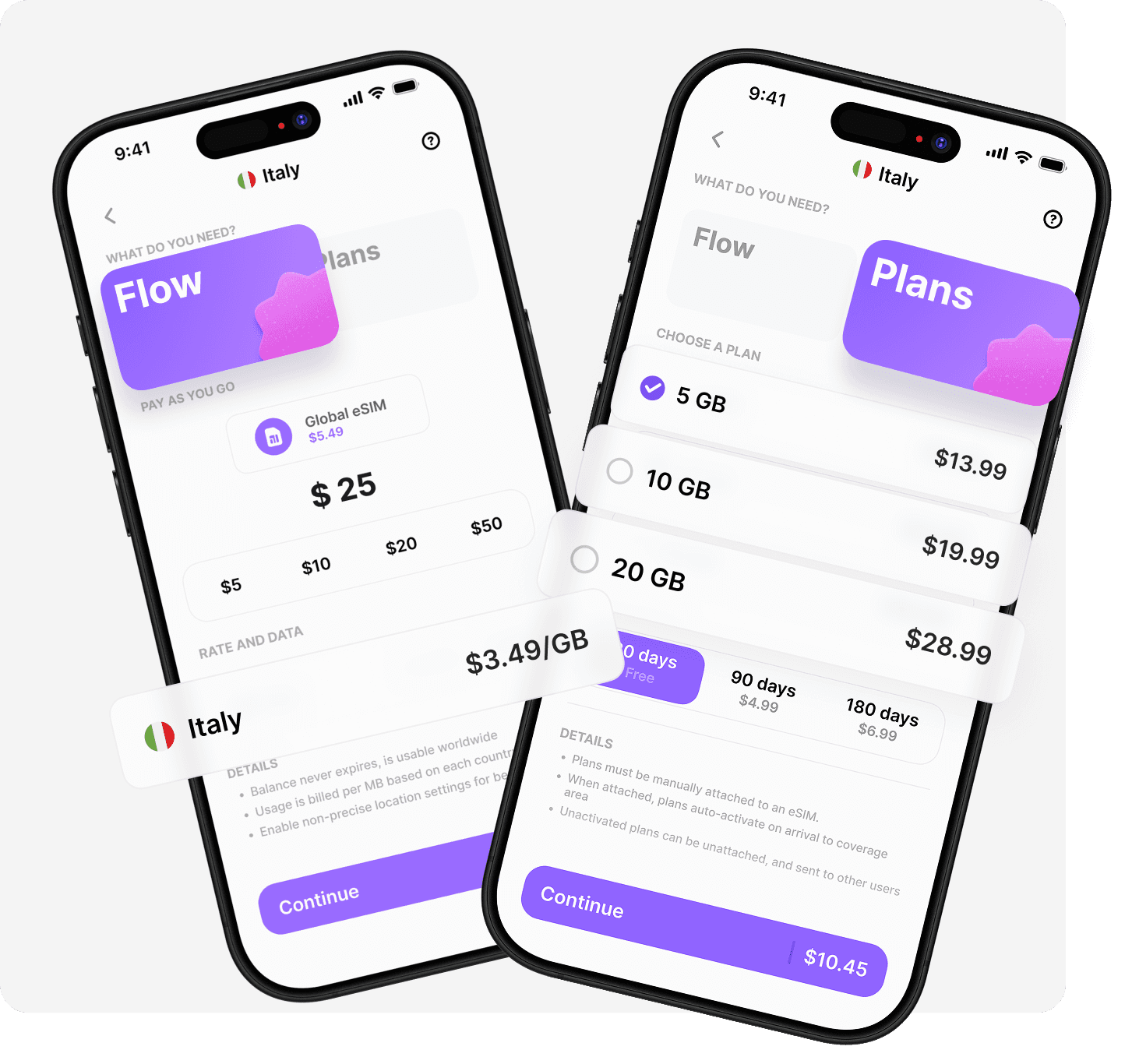
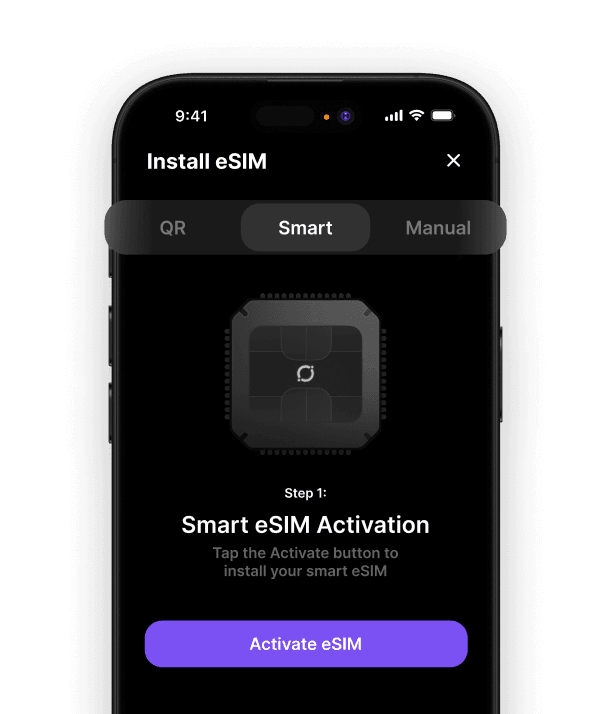
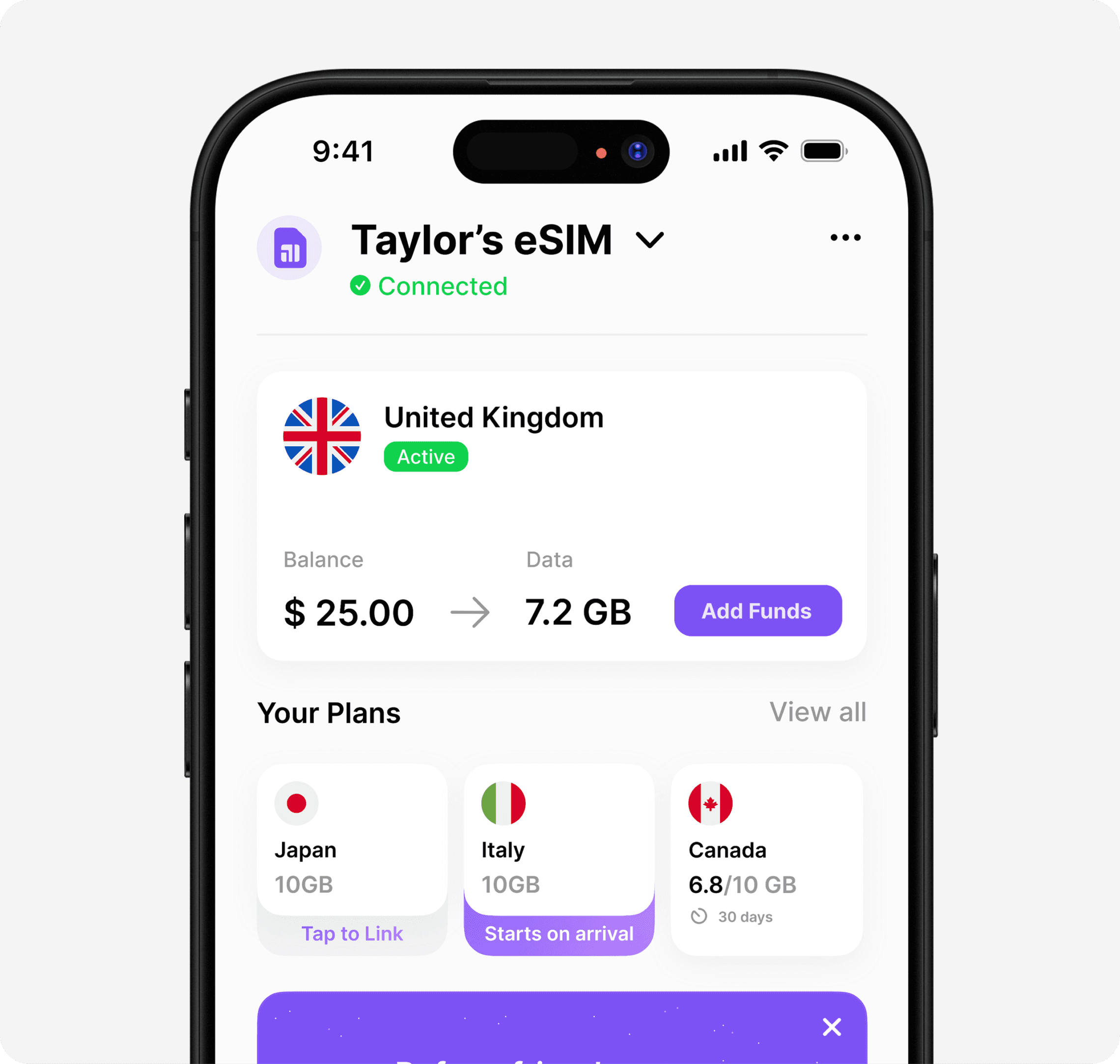
Umi competes on value, and for a light user it can be the cheapest option of all. On pay-as-you-go Flow you pay only for the data you use, from $2.55 per GB, so a short trip where you barely touch your phone costs a fraction of a fixed bundle you would only half-use elsewhere. You install one Universal eSIM, direct from the app with no QR code, it works across 200+ destinations, the balance never expires, and prepaid Plans cost less per GB if you want a set amount.
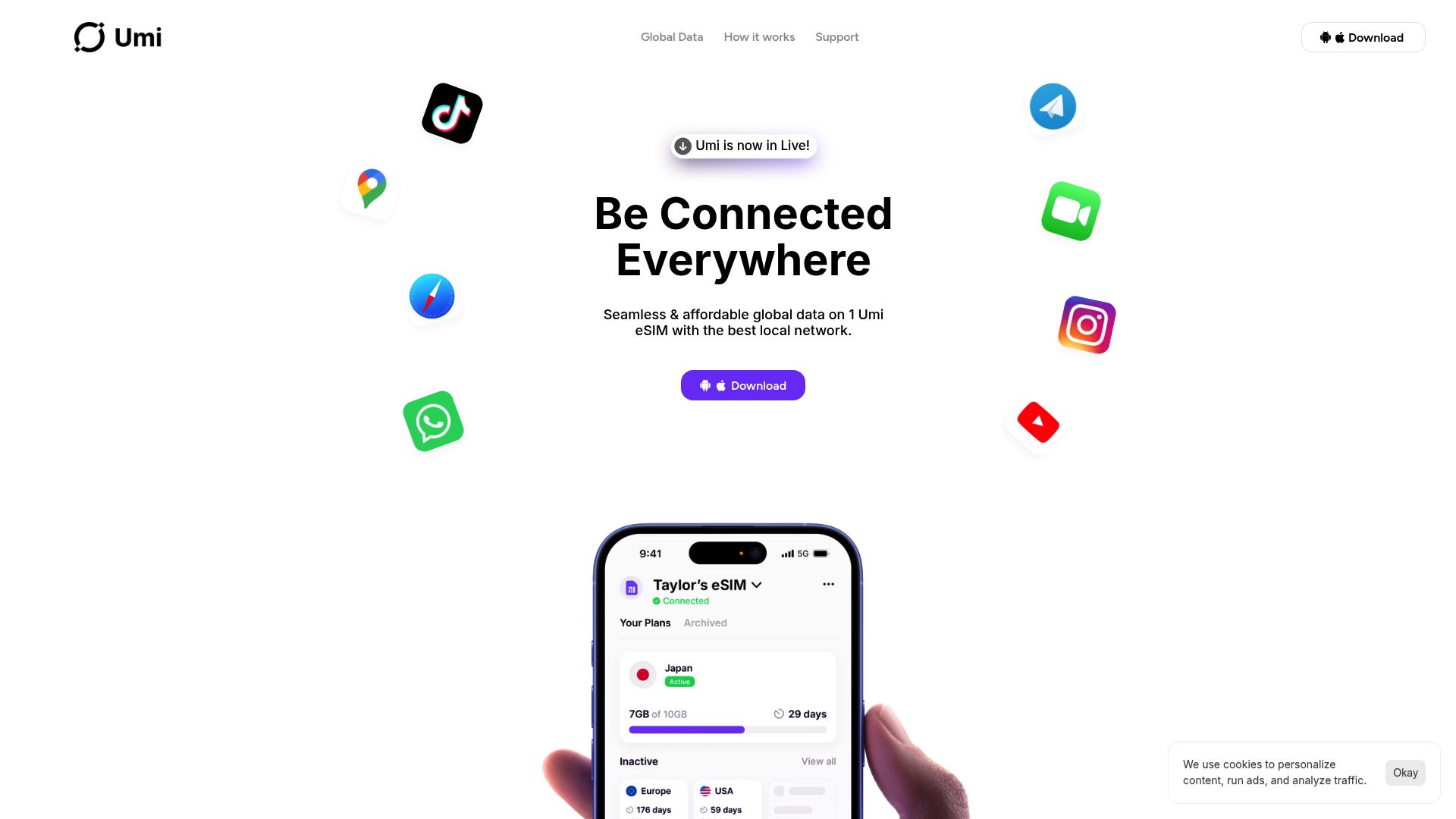
The reliability is where the value sits. Umi runs premium 4G and 5G that never throttles and routes your traffic away from high-risk networks. For companies, Groups let a business share one balance across a team, and the model saves up to 90 percent against roaming.
Best for: frequent travelers, digital nomads, businesses managing a team, and anyone tired of throwaway plans. The catch: data only, so messaging apps cover calls and texts.
Holafly: "Unlimited" With Limits
Holafly sells unlimited data in the US at about $3.90 per day, which appeals to heavy users who do not want to track an allowance.
Best for: long stays with steady heavy use. The catch: the unlimited plan still runs under a fair-use policy, hotspot sharing is capped at around 500MB on the standard US plan, and the per-day price adds up fast on a longer trip. The word unlimited does a lot of work it cannot back up.
Airalo: Wide Reach, Single-Use Plans
Airalo covers nearly every country with a familiar app. US plans run from about $6 for 1GB up to roughly $59, and a 30-day plan with real data sits at the pricey end of that range, more than a quick glance suggests.
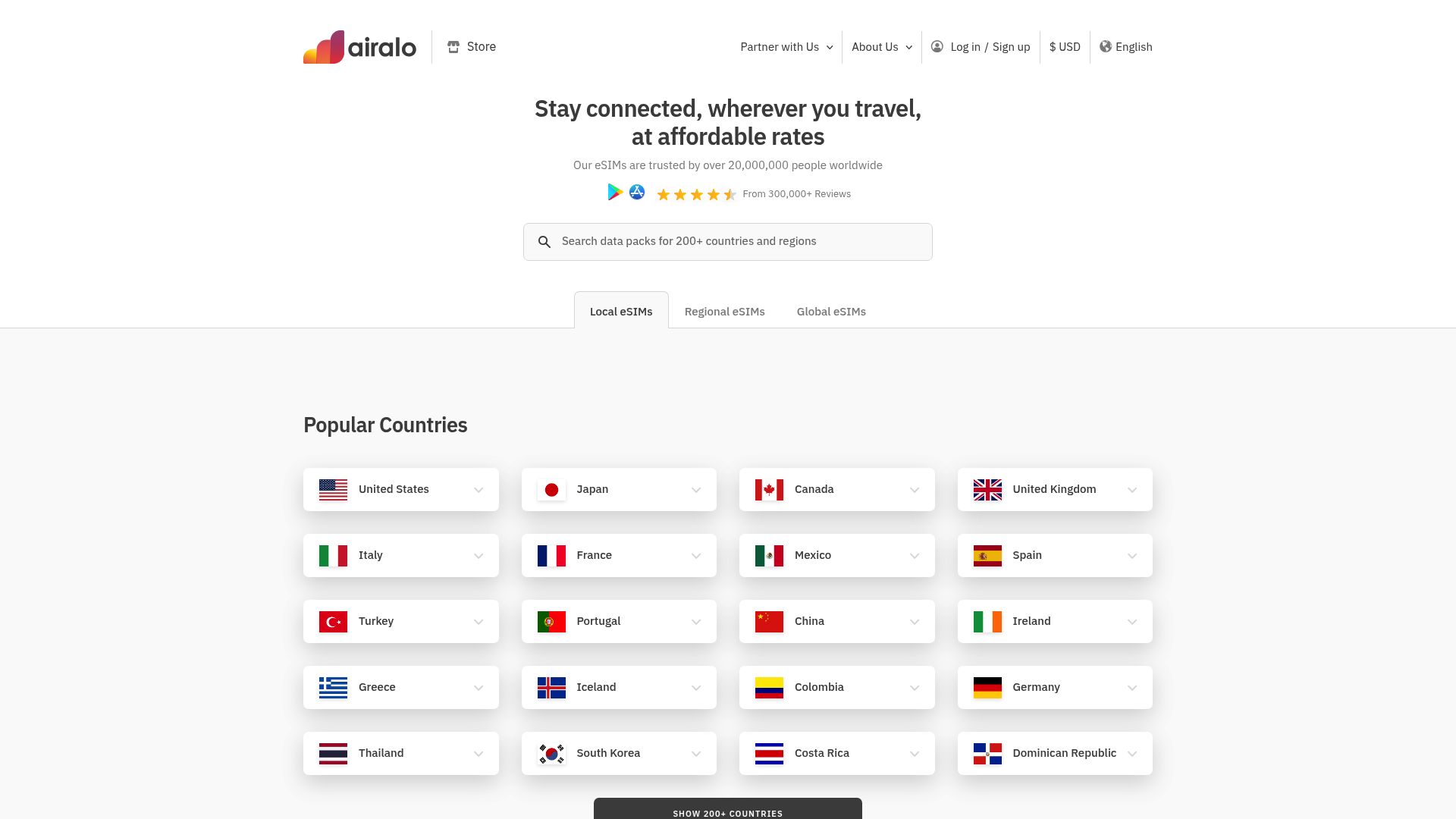
Best for: first-time eSIM users who want a wide catalogue. The catch: plans are single-use, so they end the moment the data runs out or the days expire, with no rollover; the US "unlimited" plans cap you at 3GB per day then throttle to about 1000kbps; and some recent reviews report app and payment issues.
Nomad: Flexible, but Read the Fine Print
Nomad offers flexible US and global plans, with a US 10GB plan around $15, plus daily-data options on major US networks.
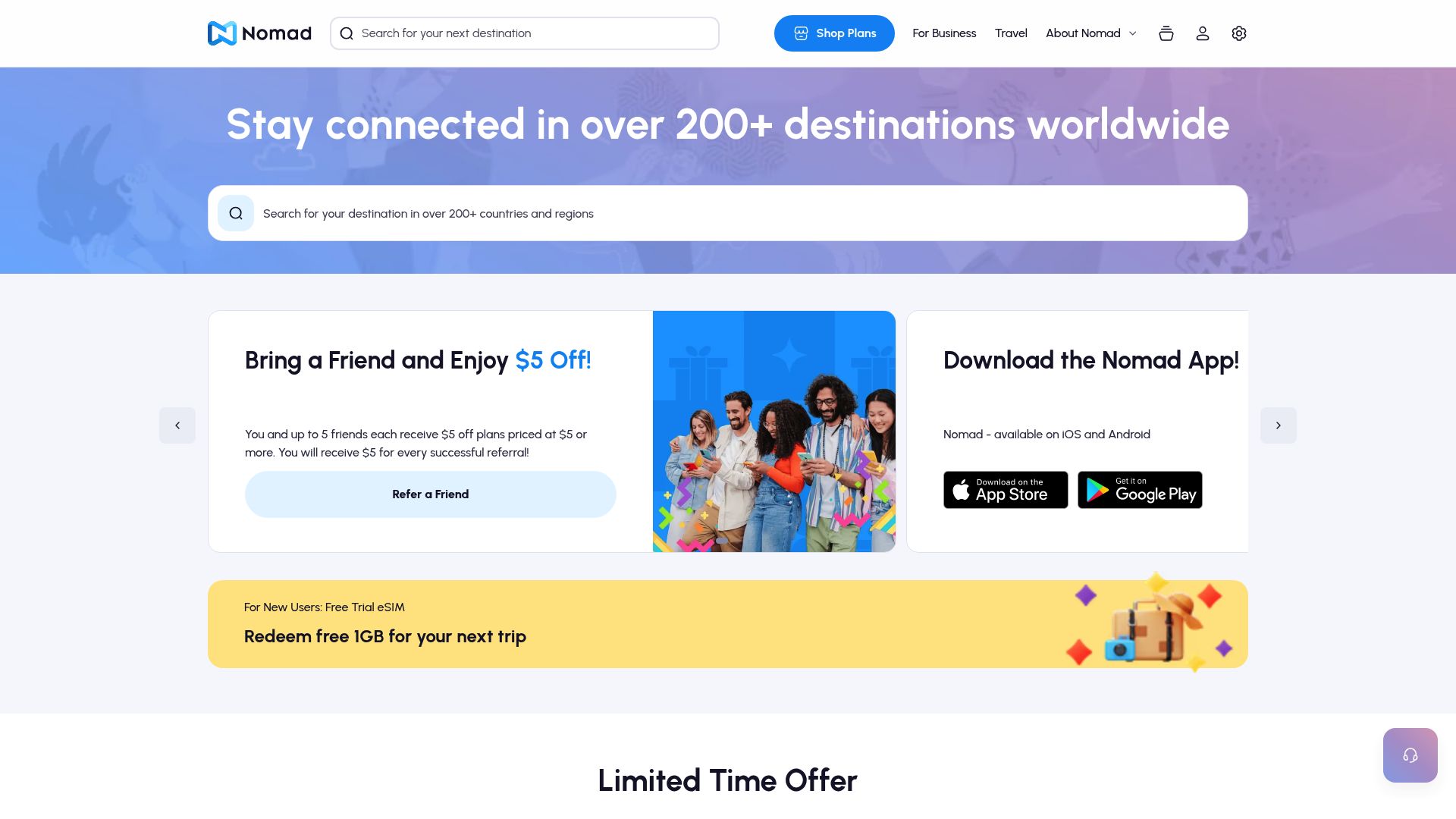
Best for: travelers who want short and long options in one app. The catch: hotspot and throttling policies read vague, so the limits are hard to know before you buy, and plans expire.
Quick comparison
Provider | Example Price | Coverage | The catch |
|---|---|---|---|
Umi | $2.55/GB pay-as-you-go | 200+ destinations | Data only; never throttled, never expires |
Holafly | ~$3.90/day (US) | Wide | "Unlimited" under fair use; hotspot ~500MB |
Airalo | ~$6–$59 (US, by plan) | 200+ countries | Single-use, expires; unlimited capped 3GB/day |
Nomad | ~$15 / 10GB (US) | US and global | Vague hotspot and throttling limits |
How to Choose a Reliable Plan Without Overpaying
Match the plan to the trip, then check the fine print. If you use little data, pay-as-you-go often wins outright, since you pay only for what you use instead of a fixed bundle you leave half-spent. If you burn a lot on one short trip, a fixed plan can compete on raw price, as long as you accept the throttle and the expiry. For repeat travel, multiple countries, or work you cannot afford to lose, a persistent pay-as-you-go plan on premium networks keeps you fast and wastes nothing.
Confirm your phone supports eSIM and runs unlocked, check the coverage map for your exact destinations, and read the throttling, hotspot, and expiry terms before you pay. For US-specific coverage and network partners, see the US eSIM data page.
The Verdict
Cheap and reliable are not the same thing, and the gap between them is where budget travelers lose money and time. A throttled, expiring plan on a congested network is not a bargain once it fails at the wrong moment. For data that stays fast, never expires, and works across 200+ destinations at a fair $2.55 per GB, Umi is the value pick. Download Umi and connect the moment you land.












" height="15.96587083656648px" id="gUt8q3MIs" width="13.557999603271485px"/></svg>)