Airalo vs Holafly: Prices, Caps and Which to Pick in 2026
Written By:
Umi

Airalo vs Holafly used to be an easy call: Airalo sold cheap fixed bundles that expired, Holafly sold expensive unlimited plans that quietly slowed down. In 2026 the two have converged. Airalo now sells "unlimited" plans at almost exactly Holafly's prices, both throttle after a daily allowance, and both still price by the day, so you pay the same whether you use 200MB or 20GB. This guide puts their live prices side by side for Europe and Japan, explains what the caps actually are, and then asks the question neither brand wants you to ask: how much data will you actually use?
Quick answer: For a short heavy-use trip, Airalo and Holafly are now within a dollar or two of each other on unlimited plans, and both slow to around 1 Mbps after roughly 3GB in a day; Airalo publishes that figure, Holafly does not. For a light or multi-country trip, or for anyone who travels more than once a year, neither is the right shape: you are paying for days, and the plan dies when the trip does. Umi's Universal eSIM charges by the gigabyte instead, from $2.55/GB on a pay-as-you-go balance that never expires, on 4G/5G that is never throttled.
Airalo vs Holafly: what are the actual differences in 2026?
Airalo is an eSIM marketplace: one eSIM per country or region, with fixed packages from 1GB upwards and, since 2025, unlimited options in many destinations. Holafly sells unlimited-data plans priced by the day, from one day to 90, in a smaller list of countries. The headline distinction, bundles versus unlimited, has blurred now that Airalo sells unlimited too, so the differences that matter are the ones in the small print.
Airalo | Holafly | |
|---|---|---|
Model | Fixed GB packages plus unlimited plans, priced per package | Unlimited plans priced per day |
Daily fair-use cap on unlimited | 3GB high-speed per day by default, then 1 Mbps for the rest of that day, published in the policy | Operator fair-use policy, "no more than one day" of slowed speed; the trigger point is not published |
Hotspot on unlimited | No stated limit on tethering | 1GB per day of shareable data |
Fixed-data packages | Yes, 1GB to 20GB in most countries | Only in a few destinations |
What happens to unused data | Expires with the package | Not applicable, but unused days are still paid for |
Validity starts | When the eSIM activates, usually on first connection at the destination | When the plan is activated |
Reinstall after deleting | "eSIMs typically can't be reinstalled", only some packages allow it | Not stated; contact support |
Refund window | Requests within 30 days, investigated first | Up to six months if the eSIM was never activated |
Coverage | 200+ countries and regions, by its own count | A shorter list; check the destination page before buying |
Sources are each company's own pages, linked below, as read in October 2026. Both change prices without notice, so treat the figures as a snapshot.
How much do Airalo and Holafly cost in Europe and Japan?
Here are the live prices on each brand's Europe and Japan pages at the time of writing, with Umi's country and regional Plans for the same trip length alongside. Airalo's Europe plan covers 41 countries, Holafly's 33, Umi's regional Europe eSIM 44.
Trip | Airalo unlimited | Holafly unlimited | Umi Plan (fixed, never throttled) |
|---|---|---|---|
Europe, 5 days | $19.50 | $20.50 | 5GB for $18.95 (regional) |
Europe, 10 days | $35.00 | $37.50 | 10GB for $29.95 (regional) |
Europe, 30 days | $71.00 | $76.50 | 20GB for $45.95 or 50GB for $69.95 (regional) |
Japan, 5 days | $17.00 | $20.50 | 5GB for $14.55 |
Japan, 10 days | $34.50 | $36.50 | 10GB for $24.55 |
Japan, 30 days | $69.00 | $73.90 | 20GB for $41.95 or 50GB for $89.55 |
Two things stand out. First, the Airalo and Holafly columns are nearly identical: the brands that used to sit at opposite ends of the market now price within 5 to 10 percent of each other. Second, the question that decides value is not which brand but which column: a day-priced plan costs the same for a traveller who checks maps and messages as for one who streams all evening. Airalo's fixed packages still exist for lighter users (around $5 for 1GB over 3 days in Europe, around $20 for 5GB over 30 days), and they are the better buy inside Airalo if you know you are light. The catch is that whatever you do not use is gone when the package expires.
Is Holafly really unlimited, and what about Airalo's unlimited plans?
Neither is uncapped. No travel eSIM is, because the underlying operators impose fair-use rules, so "unlimited" always means "unlimited at a reduced speed after a threshold". The difference is in how clearly each brand tells you.
Airalo's fair use policy is explicit: the default daily high-speed threshold is 3GB, after which speed drops to 1 Mbps for the rest of that day, with the allowance resetting every 24 hours from activation, and no stated limit on tethering. Holafly's Europe and Japan pages say that network operators may apply a fair usage policy that slows speeds for no more than one day, resetting the next day, but do not say what triggers it; independent reviewers have reported throttling after roughly 3GB to 4.5GB in a day. Holafly also caps hotspot sharing at 1GB per day on its Europe plans.
At 1 Mbps, maps and messaging still work, and video calls and streaming mostly do not. If your trip involves working from the hotel, that cap is the number to plan around, not the word "unlimited". Umi does not sell unlimited plans and does not throttle: a 10GB Plan is 10GB at full 4G/5G speed, and hotspot and tethering are unlimited, drawing from the same balance.

What are the disadvantages of Airalo?
The expiry model is the main one. An Airalo package is tied to a validity window that starts when the eSIM activates, and anything you have not used when the window closes is lost. On a 5GB, 30-day package you are betting on your own usage, and most people either run out and top up at the same per-gigabyte price, or leave data on the table. The second is the reinstall rule. Airalo's own help page says eSIMs typically can't be reinstalled once deleted; only some packages allow it, and the app will tell you which. If you are tempted to delete and reinstall to fix a connection problem, do not; our guide to an Airalo eSIM stuck on activating covers the fixes that work. The third is the eSIM-per-country model: a trip through three countries outside a regional plan means three installs and three balances. Reviewers also consistently rate Airalo's support below Holafly's.
What are the disadvantages of Holafly?
Price for light users, and vagueness for heavy ones. A five-day Europe plan at $20.50 is reasonable if you will use 15GB in those five days, and poor value if you will use two. The fair-use threshold is not published, so you find out where it is when the speed drops. Hotspot is capped at 1GB a day, which rules Holafly out for anyone who needs to tether a laptop. The plans are country or region specific with no global pay-as-you-go option for a mixed itinerary, and the duration you buy is the duration you pay for whether or not you leave early. On the plus side, Holafly's refund window of up to six months for an unactivated eSIM is the most generous in the market, and support response times are consistently reported as faster than Airalo's; if you do need one, see our guide to getting a Holafly refund.
Which is better, Airalo or Holafly, by type of trip?
For a short, heavy-use trip to one country, five to ten days of streaming, video calls and navigation, the two are a coin toss on price; pick Airalo if you want to know exactly when the throttle hits and tether freely, Holafly if you value the longer refund window and faster support. For a short light trip, Airalo's fixed packages beat both unlimited plans, as long as you size the package honestly. For a long single-country stay of a month or more, both unlimited plans land around $70 to $77, which is where a fixed 50GB plan starts to look cheaper for anyone not streaming daily. For a multi-country trip, the regional plans work inside Europe and parts of Asia, and outside those regions both brands push you into one eSIM per country.
And for anyone who travels more than once a year, the honest answer is that neither is the right shape, because both charge for days rather than data.
Is there a better option than Airalo or Holafly?
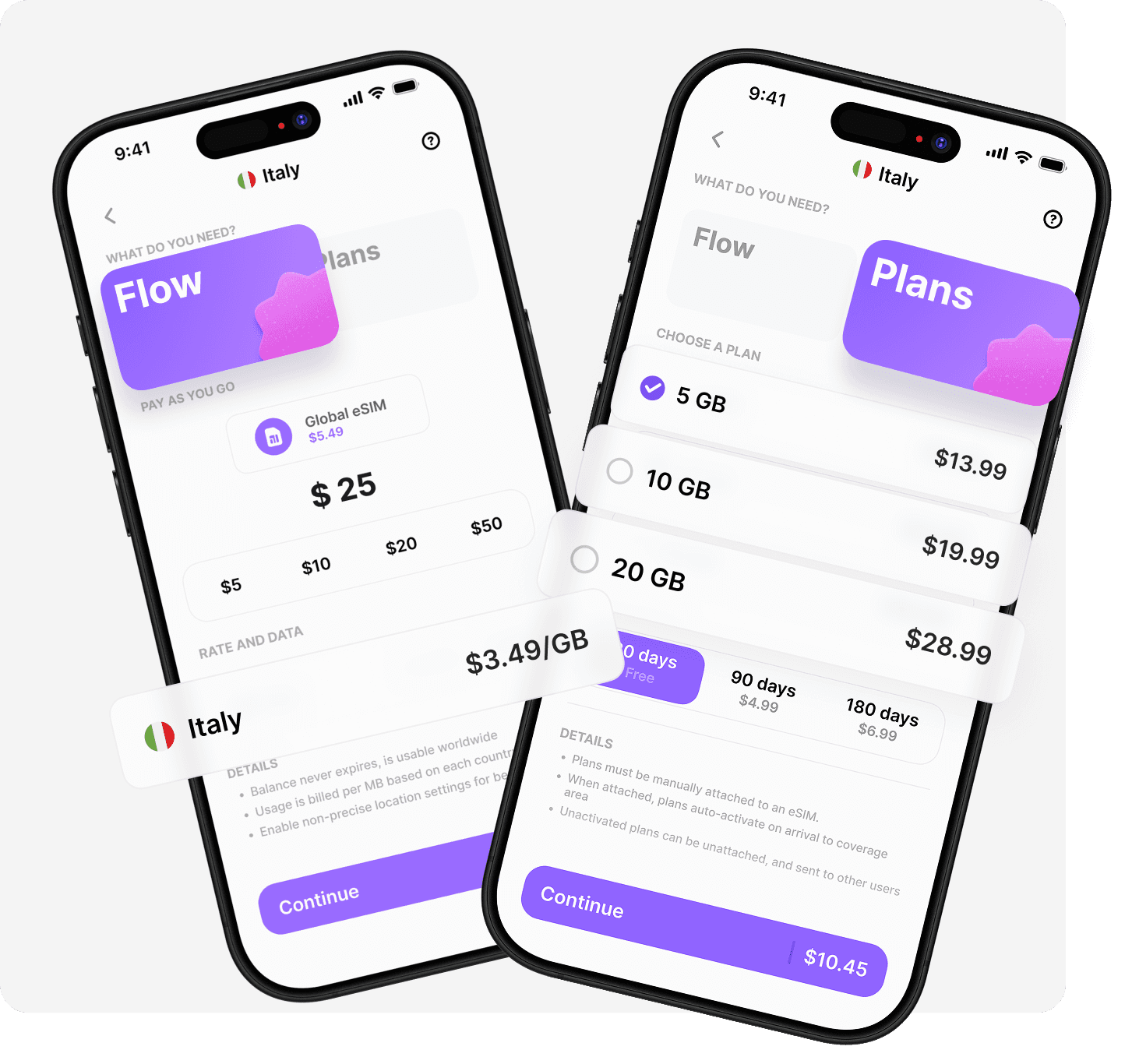
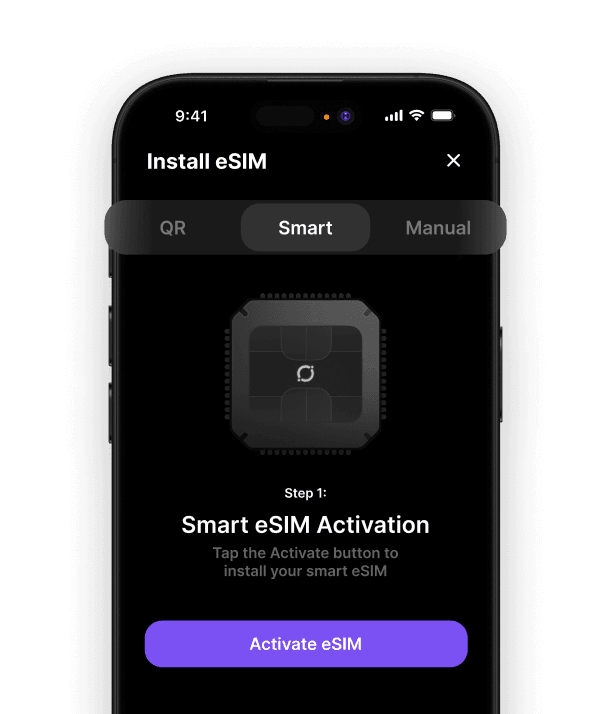
For the way most people actually use data abroad, yes. The average traveller uses well under 1GB a day: maps, messaging, a few photos uploaded, a restaurant looked up. On a day-priced unlimited plan that traveller pays the same as the person streaming in 4K. On an expiring package they lose the remainder. Umi's Universal eSIM is built around the gigabyte instead. You install one eSIM in under 60 seconds in the app, it works in 200+ destinations, and you choose between a country Plan sized for the trip or a pay-as-you-go balance you top up from $2.55/GB and spend wherever you go. Whatever is left stays in your account for the next trip; it never expires. Data is 4G/5G with no throttling and unlimited hotspot, and the eSIM can be reinstalled from the app if you ever delete it.
Airalo | Holafly | Umi Universal eSIM | |
|---|---|---|---|
Pricing unit | Per package or per day | Per day | Per GB (pay as you go) or per Plan |
Europe, 10 days, light use (around 5GB) | $35 unlimited, or around $20 for a 5GB package | $37.50 | 5GB Plan $18.95, or pay as you go, 5GB for $12.75 |
Europe, 10 days, heavy use (around 15GB) | $35, throttled after 3GB a day | $37.50, throttled at an unpublished point | 20GB Plan $45.95, never throttled |
Unused data | Expires | Days expire | Never expires |
Throttling | After 3GB a day on unlimited | After an unpublished daily amount | Never |
Hotspot | No stated limit | 1GB a day | Unlimited, drawing from your balance |
Number of eSIMs for a world trip | One per country or region | One per country or region | One |
Reinstall if deleted | Usually not | Not generally | Yes, from the app |
The table shows where each wins. A 15GB week in Europe is cheaper on either unlimited plan than on Umi's 20GB Plan, as long as you can live with the daily throttle. A 5GB fortnight is cheaper on Umi, and a 5GB fortnight followed by a second trip in the spring is much cheaper, because the second trip starts with whatever you did not use. How Umi compares with the whole field, not just these two, is in our best travel eSIM guide, and the economics of a balance that carries over are in eSIM data that never expires.
One more difference the comparison sites skip: where your data goes. A 2025 USENIX Security study found Holafly traffic in the US exiting the internet through China Mobile in Hong Kong, and most travel eSIMs assigning IP addresses from a third country. If that matters to you, read are travel eSIMs safe before choosing any of the three.
Airalo vs Holafly: the short version
Airalo and Holafly now sell the same product at nearly the same price: a day-priced "unlimited" plan that slows to about 1 Mbps after a few gigabytes. Airalo tells you where the line is and lets you tether freely; Holafly refunds more generously and answers support faster. Pick between them on those details if your trip is short and heavy. If it is light, long, multi-country, or one of several this year, buy data instead of days.
Ready to pay for the data you use and keep the rest? Install your Universal eSIM and top up a pay-as-you-go balance before you fly. Our Airalo alternative guide covers the switch step by step.












" height="15.96587083656648px" id="gUt8q3MIs" width="13.557999603271485px"/></svg>)