All articles
eSIM Guides
·
Umi
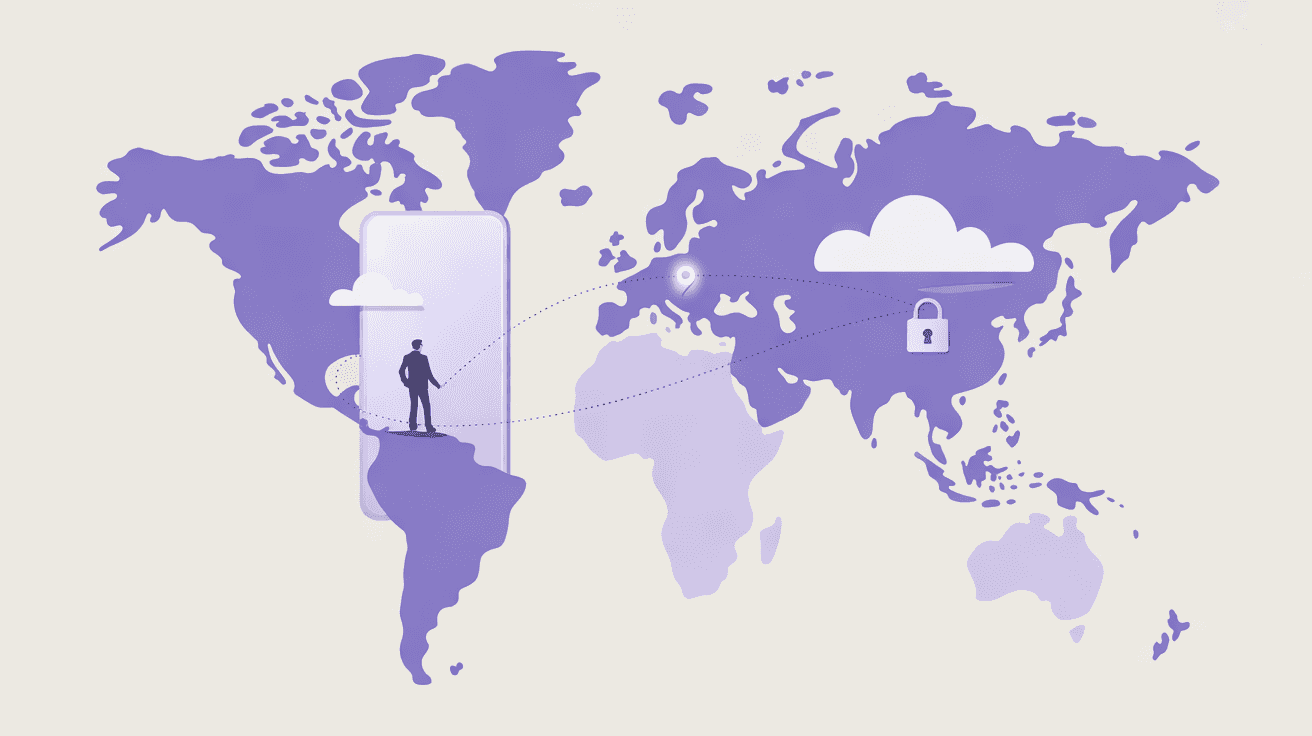
On a Chinese SIM or on hotel WiFi, WhatsApp does not work in China, and neither do Google, Gmail, Google Maps, Instagram, Facebook, YouTube, X, Telegram or Signal. The block is the Great Firewall, applied to every connection that reaches the internet from inside China, and it has been the position since WhatsApp was cut off in 2017. There is one exception that matters to visitors: a connection whose data leaves for the internet outside China is not filtered, which is why a home SIM on roaming, and most travel eSIMs, carry WhatsApp and Google as normal. This guide sets out what is blocked and what still works, why the SIM in your phone decides which list you are on, where VPNs stand, and the five things to set up before you fly so that the trip does not start with a blank screen.
Quick answer: On a Chinese SIM or any WiFi in China, no: WhatsApp, Google, Gmail, Maps, Instagram, Facebook, YouTube and X are blocked. On a travel eSIM or home SIM whose data exits outside China, yes: the apps work as at home, no VPN needed. Umi's China eSIM runs on China Unicom 5G at $2.95/GB pay as you go, and its data is not broken out in China, so WhatsApp and Google work on it; that can change without notice, so download offline maps and a translation pack before you fly anyway. Apple Maps, iMessage, FaceTime, Bing, Outlook and WeChat work on everything.
What is blocked in China?
The firewall blocks at the network, so it does not matter which phone or app version you have. The lists, as they stand in November 2026:
On a Chinese SIM or China WiFi | On a roaming SIM or non-local eSIM | |
|---|---|---|
WhatsApp (messages and calls) | Blocked | Works |
Google search, Gmail, Drive, Docs, Photos | Blocked | Work |
Google Maps | Blocked (and the map data is poor even where it loads) | Works, with offset roads; Apple Maps is better in China |
Instagram, Facebook, Messenger, Threads | Blocked | Work |
YouTube, X, Reddit, Pinterest | Blocked | Work |
Telegram, Signal, Discord | Blocked | Work |
ChatGPT, Claude, Gemini | Blocked | Work |
Wikipedia, most Western news sites | Blocked | Work |
Apple Maps, iMessage, FaceTime, App Store, iCloud | Work | Work |
Bing, Microsoft Outlook, Teams, OneDrive, LinkedIn | Work (Bing results are filtered) | Work |
Zoom | Works for joining meetings on most accounts | Works |
WeChat, Alipay, Didi, Baidu Maps, Amap | Work | Work |
Booking.com, Trip.com, Airbnb, Agoda | Work | Work |
Two things to know about the "works" column. Apple's services work because Apple runs them from inside China for Chinese users, so iMessage and FaceTime are the one Western messaging route that survives on a local SIM. And the lists move: Bing has been blocked for days at a time, Zoom has been restricted during sensitive periods, and apps that work today can stop without notice.
Why the SIM decides
Every mobile connection has a point where its traffic leaves the operator's network for the public internet, and the firewall sits at that point for every Chinese operator. A China Mobile or China Unicom SIM bought in the country, and every hotel, airport and café WiFi, exits inside China and is filtered. A foreign SIM roaming on those same networks usually does not: its traffic is tunnelled back to the home operator (or to a gateway in Hong Kong, Singapore or Europe) before it reaches the internet, so it exits outside the firewall. That is why a visitor with a British or American SIM on roaming can open WhatsApp in Shanghai while the person next to them on a local SIM cannot, and why most travel eSIMs, which are foreign profiles roaming on Chinese networks, carry the Western internet without a VPN.
The catch is that it depends entirely on where the eSIM provider breaks out the data. An eSIM with a Chinese IP address (local breakout, cheaper for the provider) is inside the firewall like a local SIM. Umi's China eSIM breaks out outside China, so WhatsApp, Google and the rest work on it as things stand in November 2026. Treat that as how it is today rather than a guarantee: routing can change on the provider's side or the operators', and the one-minute exit-country check tells you which side of the wall you are on the moment you land. If the IP country shows as China, the block applies.
Are VPNs legal in China for tourists?
Using a VPN is not an offence a tourist is prosecuted for in practice, but the state blocks them actively, the major providers' servers are detected and cut off within hours during sensitive periods, and the app stores inside China do not carry them. People who rely on a VPN in China spend the trip reconnecting. If you want one as a backup, install it and sign in before you fly, pick a provider with obfuscated servers, and expect it to work some of the time. For most visitors the eSIM route above makes the question moot: data that exits outside China does not need a VPN at all.
What to set up before you fly
Do these at home on WiFi; several of them cannot be done once you are on the wrong side of the wall.
Install your travel eSIM and confirm the plan is active. Umi's installs from the app in under a minute and reinstalls from the app if you ever delete it.
Install WeChat and Alipay and link a foreign card. Both accept Visa and Mastercard for tourists, and they are how you pay for taxis, metro, street food and most shops; cash is accepted but increasingly rare.
Download offline maps for every city (Apple Maps or Google Maps offline areas), plus a Chinese offline pack in Google Translate or Apple Translate, and the Didi app for taxis.
Save hotel addresses in Chinese characters in your notes, with phone numbers; taxi drivers and hotel staff will read them.
Tell family you will be reachable on WhatsApp or iMessage, and that if WhatsApp goes quiet, iMessage and FaceTime still work on any connection in China.
Once there, the one habit that matters: keep the phone on mobile data for anything Western, and treat WiFi as a convenience for WeChat and streaming Chinese services only. Joining the hotel WiFi for a Google search is how most people discover the firewall.

Which eSIM for China?
Three questions matter for China more than price: whether the provider's data exits outside China (ask, and check on arrival), whether the plan can be reinstalled if something goes wrong on day one, and what happens to unused data when you leave.
Chinese SIM (China Mobile / Unicom) | Umi China eSIM | |
|---|---|---|
Where you get it | Airport counter with passport; real-name registration | Umi app, before you fly |
WhatsApp, Google, Instagram | Blocked | Work, while the breakout stays outside China |
Chinese number for WeChat, Didi | Yes | No (WeChat accepts a foreign number) |
Network | The operator you chose | China Unicom, 4G/5G, never throttled |
Price | Cheap per GB locally | $2.95/GB pay as you go |
Hotspot | Per operator terms | Unlimited |
Leftover data | Expires with the pack | Stays in your account for the next trip |
Umi's price is from the live China page on 7 November 2026. Airalo's China eSIM, for comparison, is sold as "unlimited" on China Unicom from $11.50 for 3 days to $69 for 30, with a daily high-speed cap its page does not state (see unlimited data eSIM caps), and the page says nothing about the firewall or which apps work. For a two-week trip through Beijing, Xi'an and Shanghai, 5GB to 8GB on Umi covers maps, WeChat, messages and photos with the Western apps intact, and the balance left over carries on to Hong Kong, Japan or wherever is next, as explained in eSIM data that never expires.
China is one of several countries with a rule that catches visitors' phones. The UAE blocks WhatsApp and FaceTime calls rather than the apps; Russia puts every foreign line through a 24-hour block on arrival; Turkey counts 120 days on any SIM before blocking a foreign phone; Egypt charges 38.5% after 90 days on a local SIM; Indonesia keeps an IMEI whitelist. Delayed on the way? What you're owed when a flight is delayed covers the thresholds, and Umi gives you 1GB free if an international flight is an hour late or cancelled. Our best travel eSIM guide covers the field.
Flying to China? Install your Universal eSIM and WeChat before you go, and keep the phone on mobile data when you land.
Keep reading

eSIM Guides
Does WhatsApp Work in Dubai? Calls, FaceTime, VoIP Rules
WhatsApp messages work in Dubai; calls are blocked on UAE networks. The 2026 VoIP rules, the licensed apps, why some travel eSIMs get round it, and VPNs.

eSIM Guides
Flight Delayed? What You're Owed at 1, 2, 3 and 5 Hours
What airlines owe you at 1, 2, 3 and 5 hours in the UK, EU and US, what to do at the gate, and the one thing you can claim at 60 minutes: 1GB of free data.
eSIM Guides
Foreign Phone in Indonesia: IMEI Rules, 90 Days, Bea Cukai
Indonesia blocks unregistered foreign phones on local SIMs. The free 90-day tourist route, the Bea Cukai route and taxes, the 60-day deadline, and roaming.