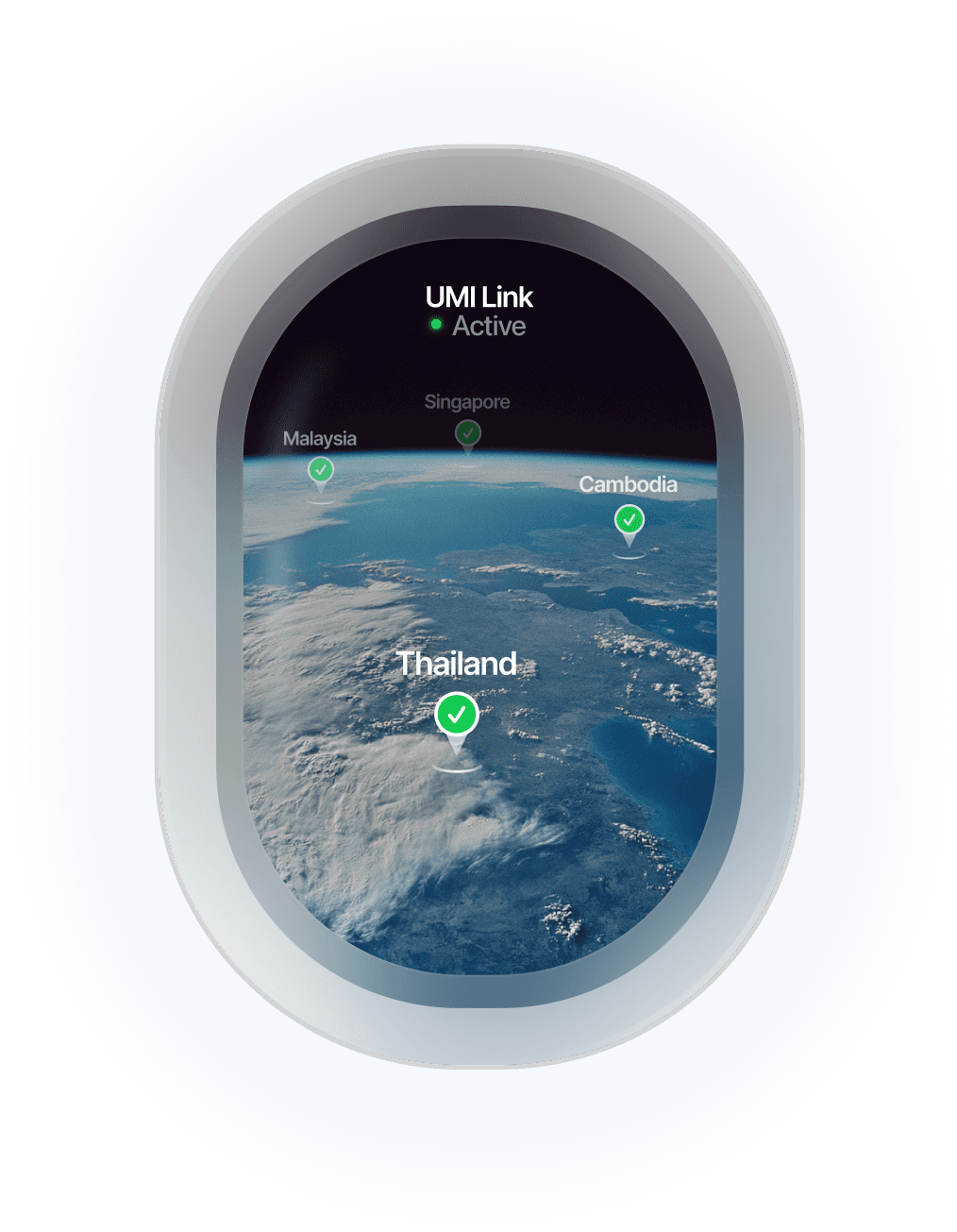
eSIM for Business: One Shared Data Plan for Your Team
Written By:
Umi

An eSIM for business keeps a travelling team connected the moment they land, without a stack of roaming bills or a different SIM card in every country. Instead of each employee buying their own data abroad and expensing it later, the whole team draws from one shared balance you control from a single dashboard. This guide explains how a business eSIM works, where it saves money against carrier roaming, and how Umi Business fits, so you can decide what suits your team rather than take a sales pitch.
One point up front, because the search results blur it: this page is about mobile data for staff who travel, not a business phone number you add to your dialler. Those are different products. If your team needs data abroad without bill shock, read on.
Key takeaways
One Universal eSIM per employee installs once and covers 200+ destinations, so there is no SIM to swap at each border.
The whole team draws from a single pay-as-you-go balance that never expires, so data nobody used on one trip is still there for the next.
Umi Business starts at $19.95 per eSIM per year, with admin controls to distribute Plans, set recurring allocations, and apply custom rates.
Pooling data across a team can save up to 90% versus carrier roaming, though the saving varies by trip type.
It is data-only today, so staff keep their existing SIM for calls and texts.
Can you get an eSIM for business, and how does it work?
Yes. An eSIM for business is the same digital SIM technology consumers use, wrapped in a management layer for teams. Each employee installs one Universal eSIM on their phone, and instead of paying for their own bundle in each country, they all draw data from one shared balance that an administrator tops up and oversees.
The practical difference from a consumer eSIM is control. A manager buys data once, decides who gets what, and sees usage in one place rather than chasing receipts. The employee experience stays simple: install the profile in under 60 seconds, land abroad, and the phone connects to a premium local network automatically. There is no QR code to swap and no new eSIM to buy per country, because the same profile works across 200+ destinations.
Can I use an eSIM for business travel?
For almost any modern phone, yes. An eSIM for business travel works on eSIM-enabled handsets alongside the employee's existing SIM, so their normal number still rings for calls and texts while the eSIM carries data abroad. That dual-SIM setup is what makes it practical for work: no one loses their everyday number.
This suits the bring-your-own-device reality of most teams. Staff keep their own phones and personal numbers, and the company simply adds a data profile they can switch on when they travel. Older handsets, roughly pre-2018, may not support eSIM, so it is worth confirming compatibility before you roll it out across a team. For the wider case for switching from roaming, our guide to the best travel eSIM covers how persistent eSIMs differ from disposable per-trip plans.
What is the best eSIM for business use?
The best eSIM for business is the one whose coverage matches where your people actually travel, whose pricing fits how much data they really use, and that gives an administrator real control over spend. For a team, those last two matter as much as raw price, because the hidden cost of business connectivity is wasted data and untracked expenses, not the headline rate.
Judge any business eSIM plan on four things. Coverage: does one profile span every region your staff visit, or does it stop at a border? Cost model: do you pay per gigabyte used, or buy bundles per person per country that expire unused? Admin: can one person distribute data, set allocations, and see usage? Expiry: does unused data carry over, or vanish when a trip ends? A consumer eSIM can score well on coverage and still fail a team on admin and expiry.
The real cost of carrier roaming for a team
Carrier roaming is where business connectivity quietly bleeds money, because the cost multiplies by every employee on every trip. A single traveller might shrug off a daily roaming fee. Multiply that across ten staff over a fortnight of travel, add the data overage charges nobody noticed until the invoice, and the figure stops being trivial.
There is a second, less visible cost: expensing. Every roaming charge and every individually bought SIM becomes a receipt someone has to submit, code, and reconcile. Pooling data onto one balance removes that admin entirely, because there is a single bill instead of a scattered pile of personal claims. Pooled team data can save up to 90% versus carrier roaming, depending on trip type and how much your team uses, which is the difference between a connectivity line item you dread and one you barely notice.
An honest comparison of the three options
Here is how the three common ways to keep a travelling team online actually compare. Figures describe the model, not a specific carrier quote, because roaming rates vary by network and destination.
What you are comparing | Carrier roaming | An eSIM per employee | Umi Business shared balance |
|---|---|---|---|
How you pay | Daily or per-MB fees on each person's contract | A separate bundle bought per person, often per country | One pay-as-you-go balance for the whole team |
Unused data | Not applicable, but overage is charged | Expires with each bundle, so it is lost | Never expires, carries to the next trip |
Admin and expensing | Scattered across personal phone bills | Individual receipts to reconcile | One bill, one dashboard, usage visible |
Coverage | Home network's partners, varies by country | Depends on each bundle bought | One Universal eSIM across 200+ destinations |
Control over spend | Little, until the invoice arrives | Per-person, hard to see centrally | Distribute, cap, and set recurring allocations |
Typical cost outcome | Highest, and unpredictable | Better, but data is wasted on expiry | Up to 90% less than roaming, varies by trip |
The pattern is consistent: roaming is the most expensive and least predictable, individual eSIMs are cheaper but waste data and scatter admin, and a shared balance is the model built for teams.
Shared versus individual: one team data balance
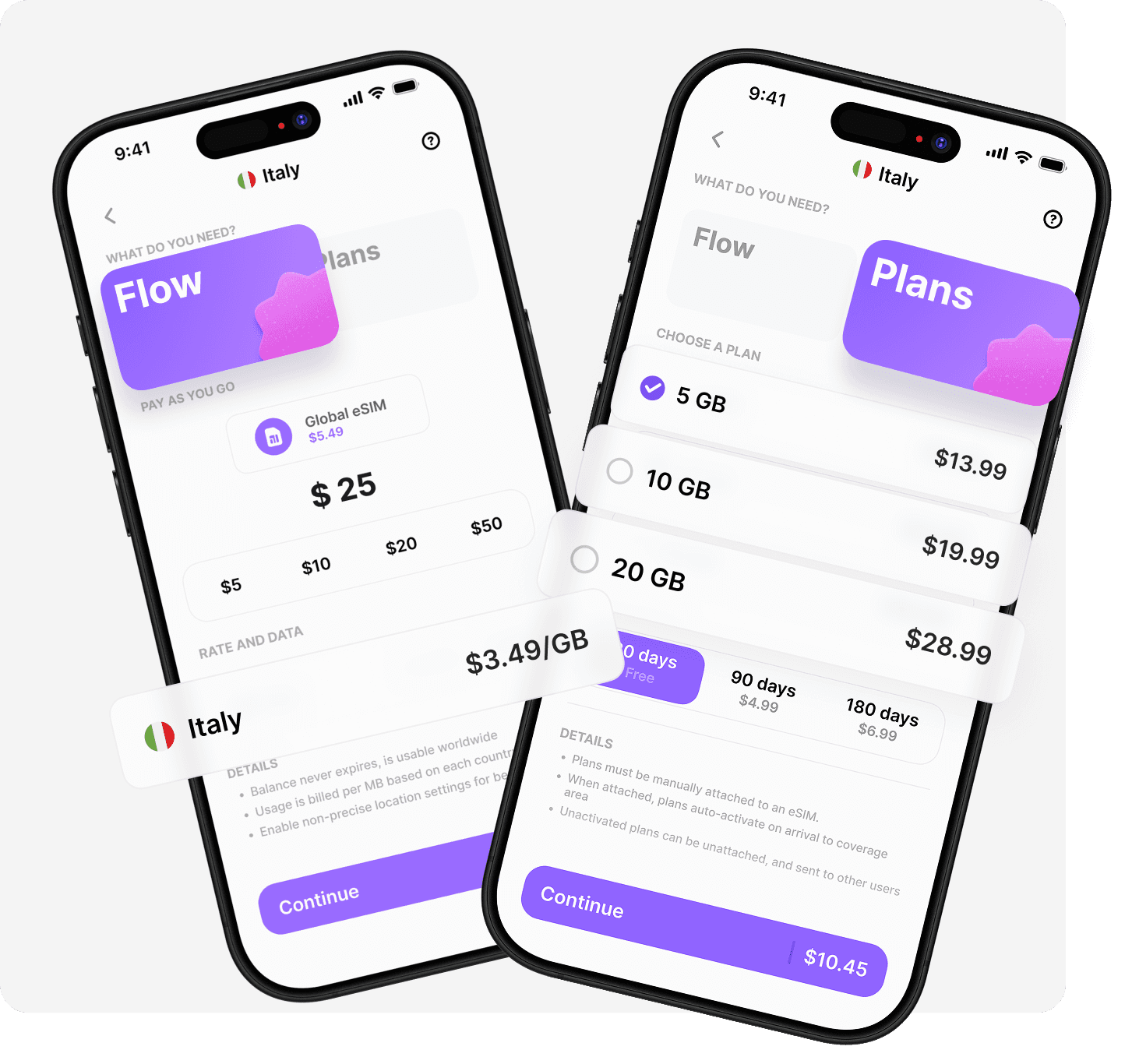
The defining feature of a business eSIM is the shared balance. Rather than each employee owning a separate allowance that expires, the team draws from one pooled pay-as-you-go balance. A heavy user on a long trip and a light user on a day visit pull from the same pot, so you buy for the team's total need, not a worst-case guess per person.

Because the balance never expires, nothing is wasted. Data bought for a conference in Berlin that finished early is still there for a sales trip to New York three months later. That persistence is what makes pooling cheaper over a year than per-trip bundles: you stop paying twice for data you already own. It is the same Flow balance Umi consumers use, scaled to a team and managed centrally. For the underlying pay-as-you-go mechanics, our explainer on a pay as you go eSIM for business travel walks through how the balance draws down.
Admin control: distributing Plans, recurring allocations, and custom rates
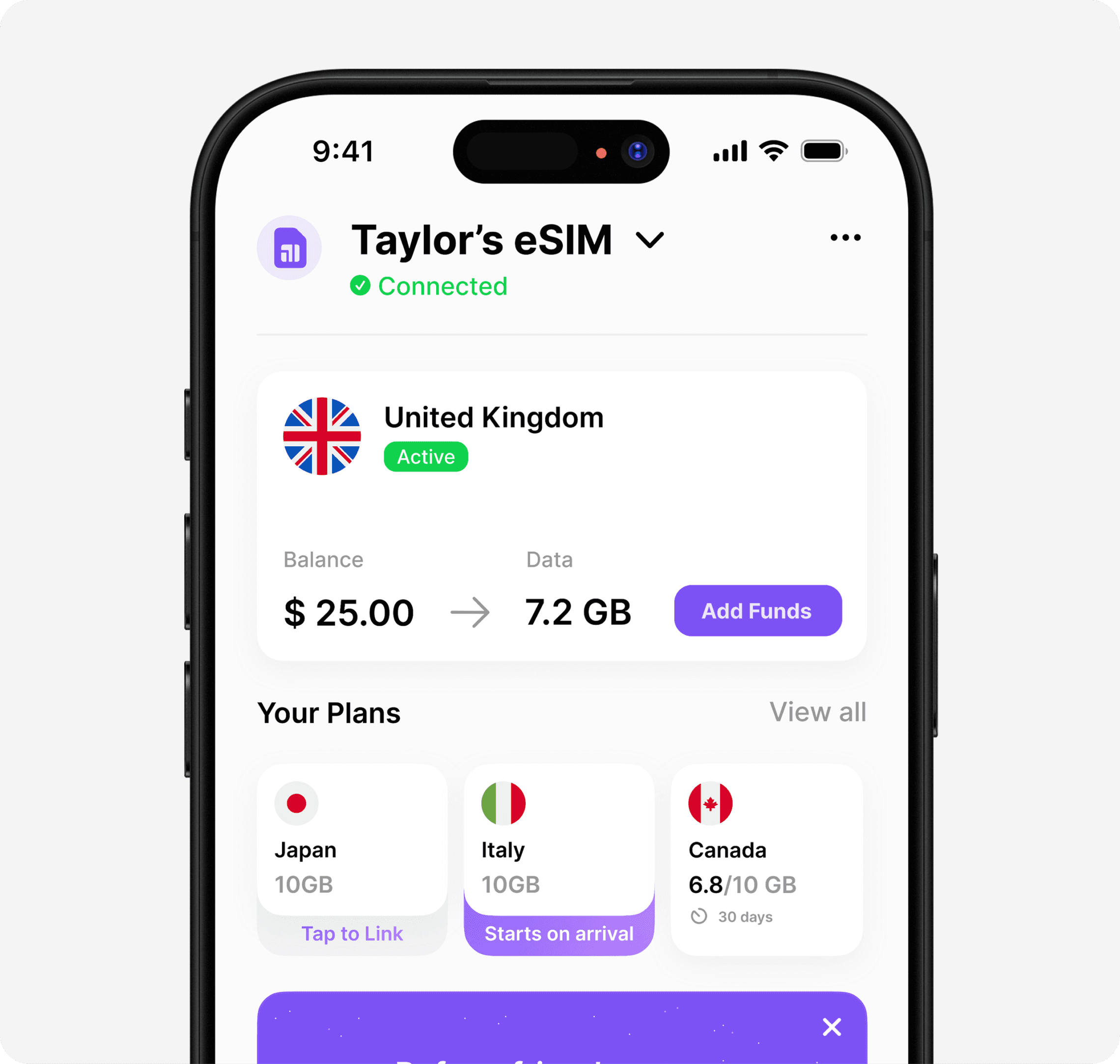
The management layer is what separates a business eSIM from handing staff a consumer plan. From one dashboard an administrator distributes Plans to individuals, sets recurring allocations for people who travel every month, and on the Enterprise tier applies custom rates for the destinations a team visits most. It turns connectivity from a pile of personal expenses into a single, governed line item.

This control is the answer to the two questions finance always asks: who is spending what, and can we cap it. Recurring Plans suit frequent travellers so no one is left scrambling for data before a flight. Group balance keeps occasional travellers covered without their own subscription. And because everything sits in one account, the month-end reconciliation that roaming creates simply disappears. You can see the full feature set on the Umi Business page.
Coverage for where teams actually travel
A business eSIM is only useful if it works everywhere your people go, on one profile. This is where buying per-country bundles falls down for teams: a salesperson crossing three borders in a week should not need three separate plans. One Universal eSIM that spans 200+ destinations means staff stay connected from London to Singapore to São Paulo without touching their settings.
Coverage runs on premium local 4G and 5G networks, never throttled, so a video call from a client's office holds up the same as it would at home. For teams concentrated in one region, it is worth checking the specific countries on your itinerary are included, though for most international businesses the single-profile, multi-destination model removes the per-country planning entirely. Staff who want to understand setup before they fly can use Umi's setup guides.
Does a business eSIM work on laptops, tablets and other devices?
Yes. An Umi eSIM works on any device that accepts an eSIM, not just phones. That includes cellular iPads and Android tablets, laptops with a built-in LTE or 5G modem, mobile hotspots and routers, and connected kit such as field units and IoT sensors. Every device sits in the same dashboard and draws from the same shared balance, so a salesperson's phone, the tablet they demo on, and the router at a pop-up event all run from one pot of data, with usage visible per device.
The one requirement is eSIM hardware. On an iPad, look for a Wi-Fi + Cellular model. On a laptop, look for a mobile broadband (LTE or 5G) option, which is common on business ranges such as Lenovo ThinkPad, Dell Latitude, HP EliteBook and Microsoft Surface. On anything else, an "Add eSIM" or "Add mobile plan" option in the settings is the giveaway. Wi-Fi-only tablets and MacBooks have no cellular modem, so they cannot take any eSIM. For those, share data from a phone instead: Umi's hotspot is never throttled and has no separate tethering cap, and it draws from the same balance.
Setting it up for a team
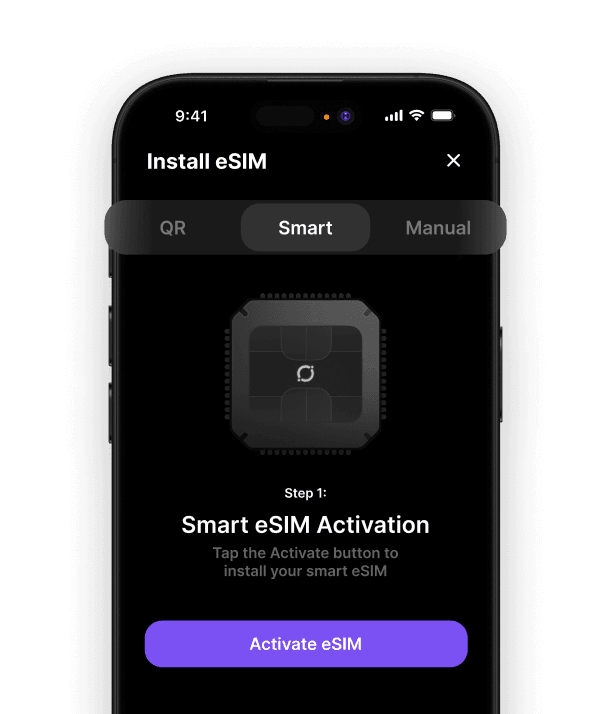
Rolling a business eSIM out to a team is a short job, not an IT project. An administrator creates the account, adds employees, and distributes a Plan or balance to each. The employee receives their Universal eSIM, installs it in under 60 seconds directly in the app, and keeps their existing SIM active for calls and texts. There is no hardware to ship and no SIM cards to post.
Because Umi's eSIM can be reinstalled, an employee who changes phones is not stranded, which is a real risk with one-time-install travel eSIMs that are lost for good if deleted. For a bring-your-own-device team that matters: people upgrade handsets, and the connectivity should follow them. Plan the rollout around your next travel cycle, add staff a few days before they fly, and let recurring allocations handle the regular travellers automatically.
Is an eSIM secure enough for business use?
For most teams, an eSIM is at least as secure as a physical SIM, and in some ways safer. There is no plastic card to lose, swap, or have lifted from a handset, which removes one route to SIM-swap fraud. The profile is provisioned digitally and tied to the device, so a phone left in a taxi cannot have its SIM popped out and reused.
For business data specifically, the gain is separation and oversight. Staff carry their personal SIM for everyday use and a managed data profile for work travel, so company data usage is distinct from personal billing. An administrator sees what is being consumed and can stop an allocation if a device is lost, rather than waiting for a carrier to act. As with any tool, the sensible controls still apply: keep devices passcode-locked, enable remote wipe, and use a VPN on untrusted networks. The eSIM does not change those basics, it just keeps the connectivity layer governed centrally.
The limits of a business eSIM, honestly
A business eSIM is not the right answer for every team, and it is worth being clear about where it does not fit. It is data-only today, so it does not replace a phone line: staff keep their existing SIM for calls and texts, and calling sits on the roadmap rather than being live. If your need is a business phone number, that is a different product entirely.
It also depends on compatible hardware. Phones older than roughly 2018 may lack eSIM support, and a laptop or tablet needs a cellular modem to take one, so a team on ageing or Wi-Fi-only devices will need to check compatibility before committing. And for a team that barely travels, the management layer is overhead you may not need; an occasional roaming day on a normal contract can be simpler. The model earns its keep when people travel often enough that wasted data, roaming premiums, and expense admin add up. Below a certain travel frequency, they do not.
Business eSIM versus business SIM card versus roaming: which for your team?
For most travelling teams, a business eSIM with a shared balance is the strongest fit, because it combines the lowest realistic cost with central control. A business SIM card from a domestic carrier suits a team that mainly works at home and travels rarely, where a normal contract with occasional roaming is simpler than managing eSIM profiles. Pure carrier roaming only makes sense for a one-off, short trip where setting anything up is not worth the effort.
The decision really turns on how often and how widely your people travel. Frequent, multi-country travel rewards a shared, never-expiring balance and admin control. Occasional single-country travel may not justify it. The honest test is the same one finance applies to any tool: total cost across a year, including the data you waste and the hours spent reconciling expenses, not the headline rate on day one. Teams that also travel for leisure or mix personal trips can point staff to the consumer best travel eSIM guide for their own use.
Three quick scenarios
It helps to map the choice onto real teams. A ten-person sales team crisscrossing Europe is the clearest case for a shared balance: lots of trips, several countries, and a finance lead who wants one bill instead of ten roaming claims a month. The pooled balance and admin dashboard pay for themselves in saved reconciliation time alone.
A founder who travels monthly to a rotating set of cities benefits from recurring allocations, so data is waiting before each flight without anyone buying a bundle in a hurry at the gate. The never-expiring balance means a quiet month is not money lost. A consultancy that flies only for the occasional client kickoff sits closer to the line: if those trips are a handful a year and mostly to one country, a normal contract with roaming switched on may be simpler, and the shared model becomes worth it only as travel picks up. The point is to match the tool to the travel pattern, not to assume every team needs the same thing.
Pricing and getting started with Umi Business
Umi Business starts at $19.95 per eSIM per year, with an Enterprise tier at custom pricing for larger teams that want custom per-destination rates and a dedicated account manager. That covers the Universal eSIM, the shared pay-as-you-go balance, and the admin dashboard, on a no-contract basis you can cancel anytime. Data is billed as your team uses it, against a balance that never expires.
The case for it is not that it is the cheapest option on a banner, because the right answer depends on how your team travels. It is that you stop paying roaming premiums on every trip, stop losing data to expiry, and stop reconciling scattered receipts, while keeping coverage across 200+ destinations and control in one place. To see the current plans and set up your team, explore Umi Business. One note for completeness: Umi Business provides mobile data only today, so staff keep their usual SIM for calls and texts, with calling on the roadmap.
Sources: GSMA on eSIM technology; Apple eSIM support for device compatibility.












" height="15.96587083656648px" id="gUt8q3MIs" width="13.557999603271485px"/></svg>)