Nomad eSIM Guide 2026: Your Essential Travel Companion
Written By:
Umi
A digital nomad does not take one trip. You work from Lisbon in spring, Bali by summer, and a co-working desk in Mexico City by autumn. Buying a fresh eSIM for each country, watching each one expire, and reinstalling at every border is the opposite of the freedom the lifestyle is supposed to give you.
This guide covers what to look for in a nomad eSIM, and why a persistent pay-as-you-go plan beats the single-trip bundles most providers sell.

What a Nomad Actually Needs From an eSIM
A two-week tourist and a full-time nomad want different things from a data plan. The tourist buys one bundle and goes home. The nomad keeps moving, on an irregular schedule, with work that depends on the connection. That changes the criteria:
One eSIM across borders. Reinstalling a profile in every country wastes time you do not have. A single eSIM that follows you wins.
Data that never expires. Travel is irregular, so a balance that resets at day 30 throws away money on every gap between trips.
Pay-as-you-go. Some weeks you barely touch it, some weeks you live on it. Paying per GB beats guessing at a fixed bundle.
Reliable, unthrottled data. You work on this connection, so a plan that crawls after a daily cap is a real cost.
Security on the move. Working from cafés and airports means your traffic should avoid high-risk networks.
Sharing for a remote team. If you run a distributed team, one balance across the group beats chasing reimbursements.
Why Umi Is the Best Nomad eSIM
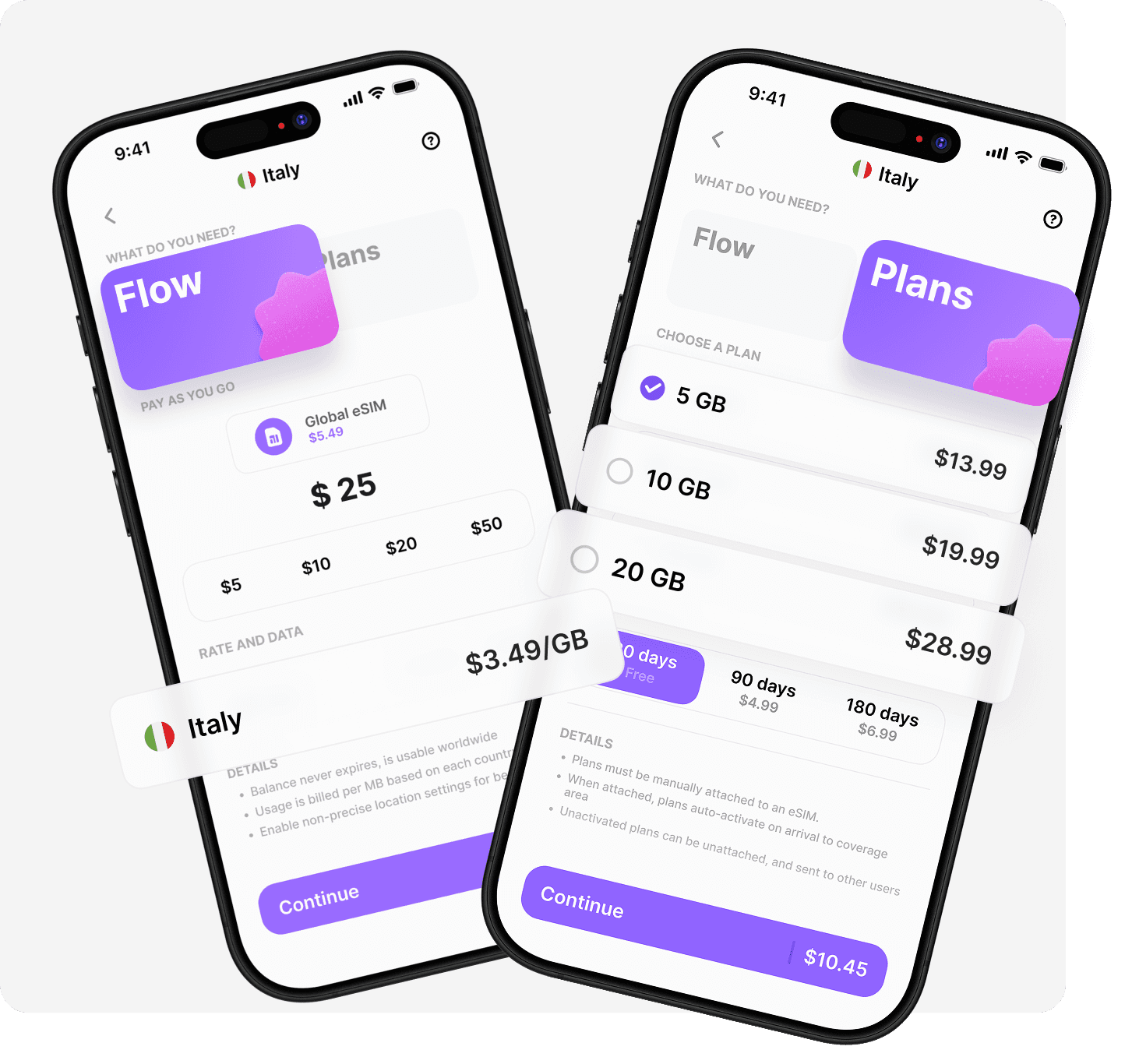
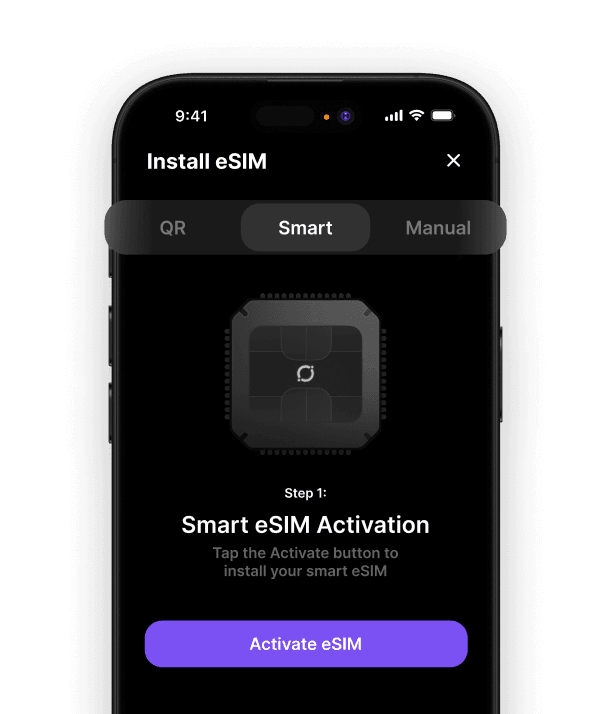
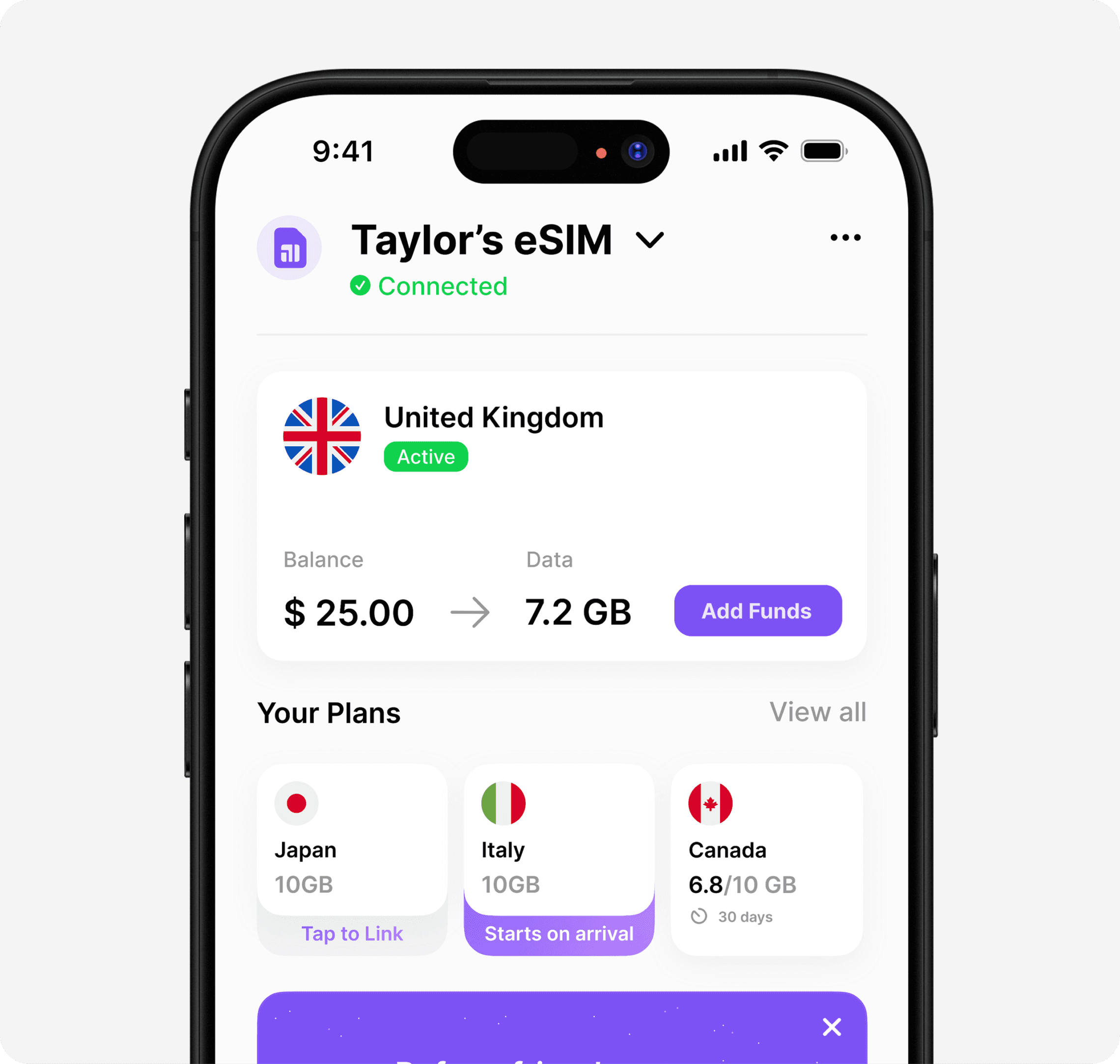
Umi is built for exactly this pattern. You install one Universal eSIM, direct from the app with no QR code, and it works across 200+ destinations. Pay-as-you-go Flow runs from $2.55 per GB, the balance never expires, and prepaid Plans cost less per GB if you want a set amount for a longer stay.
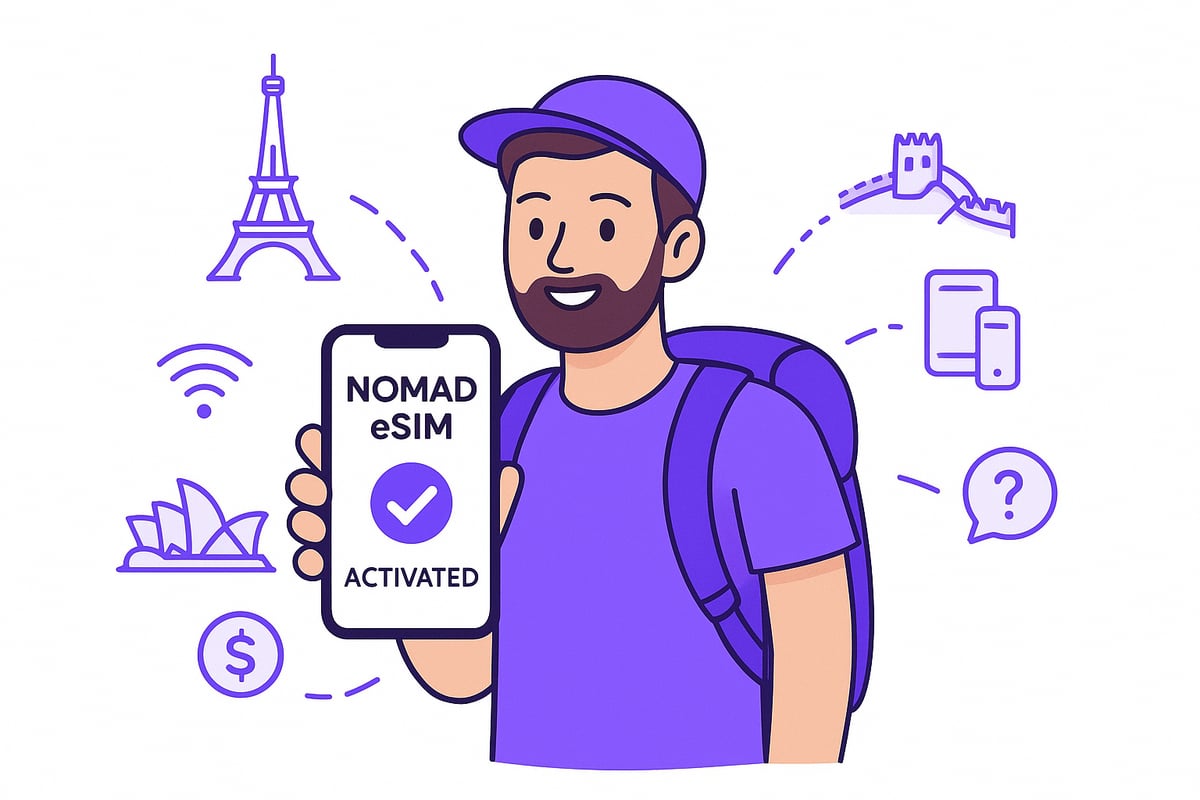
The reliability is what makes it a work tool rather than a holiday convenience. Umi runs premium 4G and 5G that never throttles, routes your traffic away from high-risk networks, and saves up to 90 percent against carrier roaming. For distributed teams, Umi Business puts the whole group on one shared balance, so nobody buys their own plan and expenses it. It runs data only, so messaging apps cover calls and texts.
Why a Persistent eSIM Beats Single-Trip Bundles
Most travel eSIMs sell fixed bundles: a set amount of data for a set number of days, tied to one destination. Buy 10GB, use six, and the rest goes when the plan expires. For a single trip that works. For a rolling, unpredictable schedule it wastes money on every gap between trips and forces a new purchase at every border.
Umi runs the opposite model. One Universal eSIM, a pay-as-you-go balance that never expires, across 200+ destinations, so the eSIM and your data follow you from country to country with nothing to rebuy. Here is how a persistent eSIM compares to a single-trip bundle on what a nomad cares about:
What a nomad needs | Umi | Typical single-trip eSIM |
|---|---|---|
One eSIM across borders | Yes, Universal eSIM | New eSIM per country |
Data that never expires | Yes, Flow balance | No, plans expire |
Pay-as-you-go | Yes, from $2.55/GB | Fixed bundles |
Never throttled | Yes | Often throttled |
Coverage | 200+ destinations | Varies |
For a fixed two-week trip, a single bundle does the job. For the rolling schedule of a nomad, a persistent pay-as-you-go eSIM is the one you do not have to think about.
Setting Up in Under a Minute
The setup matches the lifestyle. Install Umi once, direct from the app, with no QR code to scan and no SIM to swap. When you land, switch Data Roaming on for the eSIM line, since a travel eSIM connects through partner networks, and you are online. From there you top up from anywhere, with no reinstall when you cross the next border. For destination rates and tips, browse the Umi travel guides.
Practical Tips for Life on the Move
A persistent eSIM solves the plumbing, but a few habits keep you online and on budget across a year of travel.
Before you go. Confirm your phone supports eSIM, install the profile while you are on home WiFi, add enough balance for your first stop, download offline maps, and test the connection before you fly.
Budget your data. Remote work usually runs 10 to 20GB a month, depending on how many video calls and uploads you do; lighter, tourist-style use sits nearer 3 to 7GB. Pay-as-you-go means you pay for what you actually use rather than guessing at a bundle.
Save the heavy lifting for WiFi. Video streaming, cloud backups, and long calls eat data fast. When your accommodation or a co-working space has solid WiFi, run backups and big uploads there and keep the eSIM for when you are out and about.
Keep a backup plan. Even a reliable setup benefits from redundancy: a second eSIM profile from another provider, offline maps and key documents saved locally, and WiFi calling switched on for emergencies. Remember that "unlimited" plans usually carry a fair-use cap, so do not treat one as a bottomless backup.
Round out the kit. A VPN protects work data on public networks, cloud storage keeps documents reachable if a device fails, and a portable charger keeps you online when sockets are scarce.
The Verdict
The best eSIM for a digital nomad is the one you set up once and stop thinking about. Single-trip bundles suit a fixed trip, but they expire and reset with every move. Umi installs once, never expires, runs unthrottled across 200+ destinations, and bills only for the data you use from $2.55 per GB. Download Umi and let your connection keep up with you.












" height="15.96587083656648px" id="gUt8q3MIs" width="13.557999603271485px"/></svg>)