The Ultimate Guide to Global Phone Numbers with Umi eSIM (2026)
Written By:
Umi
TL;DR: Maximizing Global Connectivity with Umi eSIM
• Umi's smart eSIM revolutionizes global communication by providing seamless connectivity across 200+ destinations with a single eSIM, ideal for travelers, remote workers, and international businesses.
• Global phone numbers, including various types like virtual and toll-free numbers, are crucial for maintaining cross-border connections, and by 2026, they will be vital due to the rise in remote work.
• Umi offers a user-friendly process for obtaining a global number, integrating with devices, and managing costs, emphasizing security and strong customer support.
• The future of global communication is poised for transformation with the rise of eSIM technology, artificial intelligence, and advancements in 5G, promising enhanced connectivity and digital identity integration.
Imagine landing in a new country and instantly connecting with friends, colleagues, or clients worldwide. In today’s fast-paced world, a phone number for global use is not just a convenience, it’s a necessity for travelers, remote professionals, and international businesses alike. This essential guide will walk you through everything you need to know about securing, managing, and maximizing your phone number for global communication in 2026. We’ll explore what makes these numbers unique, why they matter, and how you can unlock seamless, reliable connections wherever you go. Ready to stay connected no matter where life takes you? Let’s dive in.
Understanding Global Phone Numbers: Definition, Types, and Importance
In today's connected world, crossing borders shouldn't mean losing touch. Whether you're traveling, relocating, or running a global business, finding the right phone number for global communication can make all the difference. Let's break down what these numbers are, how they work, and why they're more important than ever.
What is a Global Phone Number?
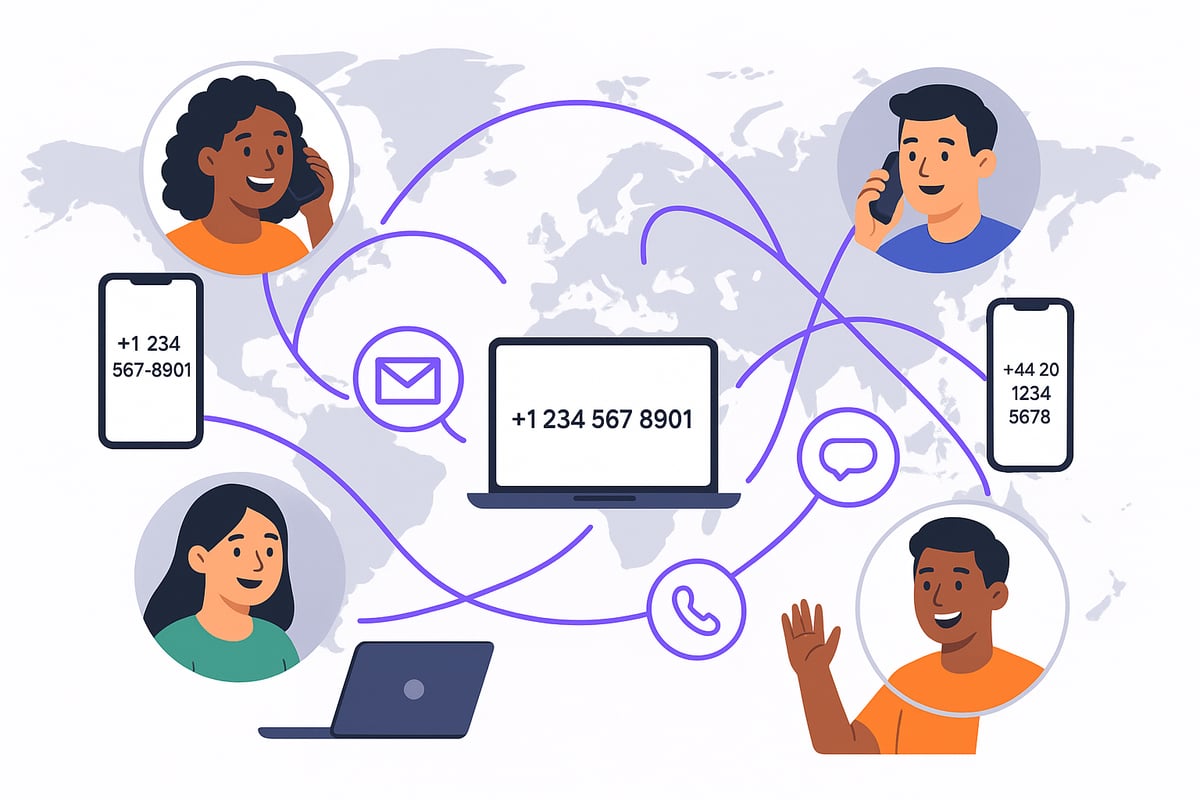
A global phone number is a unique number designed to work across multiple countries, allowing you to make and receive calls or texts internationally with ease. Unlike local numbers, a phone number for global use follows the E.164 international formatting standard, which includes a plus sign, country code, and subscriber number.
This makes it accessible from anywhere, no matter where you or your contacts are located. For example, an expat can keep the same number while moving between countries, or a business can offer a single contact point for customers worldwide.
These numbers are not tied to a specific SIM card or device. They often rely on cloud-based platforms or apps, making them highly flexible. For a deeper dive into the specifics, check out this What is a global phone number guide for more examples and real-world use cases.
Types of Global Phone Numbers
There are several types of phone number for global needs, each offering different features. The main categories include:
International virtual numbers (DID, VoIP): These use the internet to route calls, making them affordable and easy to manage.
Toll-free and UIFN numbers: Let customers reach you without paying for the call, popular with global customer support.
Mobile vs. landline numbers: Mobile numbers offer more flexibility and SMS support, while landlines may suit businesses with physical offices.
One-number solutions: Provide a single phone number for global reach, versus having separate numbers per country.
Type | Example Providers | Best For |
|---|---|---|
Virtual (DID, VoIP) | Skype, Twilio | Remote workers, SMBs |
Toll-Free/UIFN | Sonetel, Grasshopper | Customer support |
Mobile/Landline | Google Voice | Personal, hybrid use |
Each type of phone number for global communication has its own advantages. For instance, a business might prefer a toll-free number for international customer service, while travelers often opt for virtual numbers for flexibility.
Why Global Numbers Matter in 2026
By 2026, the world will see a dramatic shift in how we work and connect. With an estimated 35% of workers going remote, a phone number for global communication becomes a vital asset. It allows teams to stay connected regardless of location, while businesses can expand into new markets without hefty telecom costs.
Using a single global number also saves money compared to juggling multiple SIM cards or paying for roaming. It keeps your personal information private and secure, since you can separate work and personal calls on one device.
Emerging trends like global eSIM and digital identity solutions are making it even easier to manage your phone number for global needs. These innovations offer seamless integration, enhanced privacy, and simplified management for users everywhere.
How to Get a Global Phone Number: Step-by-Step Guide
Ready to make your communication truly borderless? Let's walk through exactly how to secure a phone number for global use, step by step. Whether you're an individual or a business, this guide will help you avoid confusion and set you up for seamless communication.
Step 1: Assess Your Needs and Use Cases
Before choosing a phone number for global purposes, start by clarifying your goals. Are you a frequent traveler, a digital nomad, or a business looking to expand internationally?
Make a checklist:
Do you need the number for personal or business use?
Will you use it mostly for calls, texts, or both?
Which countries do you need coverage in, and how much usage do you expect?
Thinking through these questions ensures you pick the right phone number for global communication without overpaying or missing essential features.
Step 2: Choose the Right Provider
With your needs in mind, it's time to select a provider for your phone number for global use. Leading options in 2026 include Twilio, Google Voice, Grasshopper, and Sonetel. Evaluate each based on coverage, pricing, features, and user support.
Here's a quick comparison:
Provider | Coverage | Price Level | Notable Features |
|---|---|---|---|
Twilio | 100+ countries | $$ | APIs, SMS, Voice |
Google Voice | 10+ countries | $ | App integration |
Grasshopper | US, CA, UK | $$ | Virtual PBX |
Sonetel | 60+ countries | $ | Call forwarding |
Need more options? Check out this Guide to global eSIM providers for a deeper look at new and emerging services.
Step 3: Registration and Verification Process
After settling on a provider, get ready to complete the registration. Most services require:
A valid ID (passport or driver’s license)
Proof of address (utility bill or bank statement)
Business documentation (if registering for a company)
Be aware of regional KYC (Know Your Customer) and AML (Anti-Money Laundering) rules. Verification can take anywhere from minutes to a few days, depending on the provider and country. Double-check your paperwork to avoid delays.
Step 4: Number Selection and Activation
Now, choose your phone number for global use. Decide which country code fits your needs or pick from available number types: local, mobile, or toll-free.
Some providers let you select vanity or memorable numbers for branding. Activation is often instant, but in some cases, it may take a few hours. Always confirm activation before sharing your phone number for global contacts.
Step 5: Integration with Devices and Apps
Once your number is active, link it to your devices. Most global numbers work with smartphones, VoIP phones, and messaging apps. Many providers support eSIM, making setup even easier across multiple devices.
Want to manage your number on several platforms? Look for features like multi-device support and seamless app integration to keep your phone number for global use accessible wherever you are.
Step 6: Testing and Troubleshooting
Test your phone number for global functionality by making calls and sending texts. Check call quality, SMS delivery, and app notifications.
If issues arise:
Restart your device or app
Recheck your provider’s setup instructions
Contact customer support for technical help
Reliable providers offer 24/7 support and escalation channels, so you can resolve problems quickly and keep your phone number for global communication running smoothly.
Key Features and Best Practices for Using Global Phone Numbers
When it comes to choosing a phone number for global use, knowing which features truly matter can make all the difference. Let’s break down what to look for and how to get the most out of your international number.
Essential Features to Look For
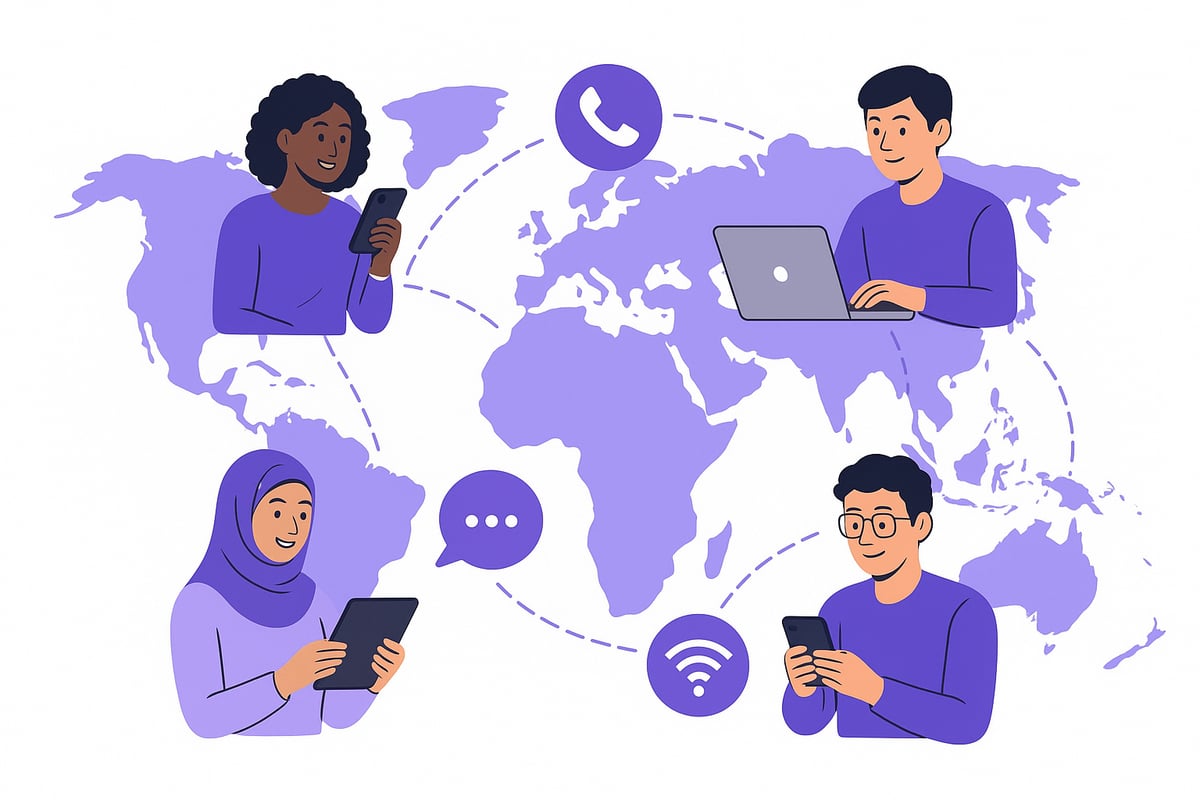
A phone number for global should offer more than just basic calling. Look for call forwarding, which lets you receive calls anywhere, and voicemail, so you never miss important messages. Interactive Voice Response (IVR) helps route calls efficiently, while SMS and MMS support keep you connected beyond voice.
Multi-language auto-attendants are crucial for businesses with diverse clients. Call recording and analytics provide valuable insights, and app integrations, such as with Slack or your CRM, streamline communication. These features ensure your phone number for global is both flexible and powerful, no matter where you are or who you need to reach.
Security and Privacy Considerations
Security is non-negotiable when managing a phone number for global. Enable two-factor authentication on your accounts to protect against unauthorized access. Look for providers offering robust spam and fraud protection to minimize unwanted calls.
Stay updated on data protection laws like GDPR and CCPA, especially if you operate internationally. Secure number porting is essential, so only authorized users can transfer your number. Prioritizing these security features ensures your phone number for global remains private and protected in every situation.
Managing Costs and Usage
Keeping costs under control with a phone number for global starts with choosing the right plan. Compare pay-as-you-go and subscription models to match your usage. Regularly monitor your call and SMS activity, and set spending limits to avoid surprises.
Watch out for hidden fees, especially when traveling or using international services. For more tips on managing your phone number while abroad, refer to Managing your phone number while traveling. Smart management helps you maximize value and stay connected without breaking the bank.
Maximizing Reliability and Accessibility
Reliability is key for any phone number for global. Make sure your provider offers network redundancy and failover, so calls keep coming through even if one system goes down. Opt for services with 24/7 support and clear uptime guarantees, ideally with a Service Level Agreement (SLA).
These best practices help ensure your international number is always accessible, giving you peace of mind and keeping your connections strong.
Regulatory, Compliance, and Number Portability in 2026
Navigating the regulatory landscape for a phone number for global use can seem overwhelming, but understanding the rules and best practices is essential. In 2026, compliance is more than a box to check—it is the foundation for reliable, secure, and accessible international communication. Let us break down the essentials to help you stay ahead.
Global Regulatory Landscape
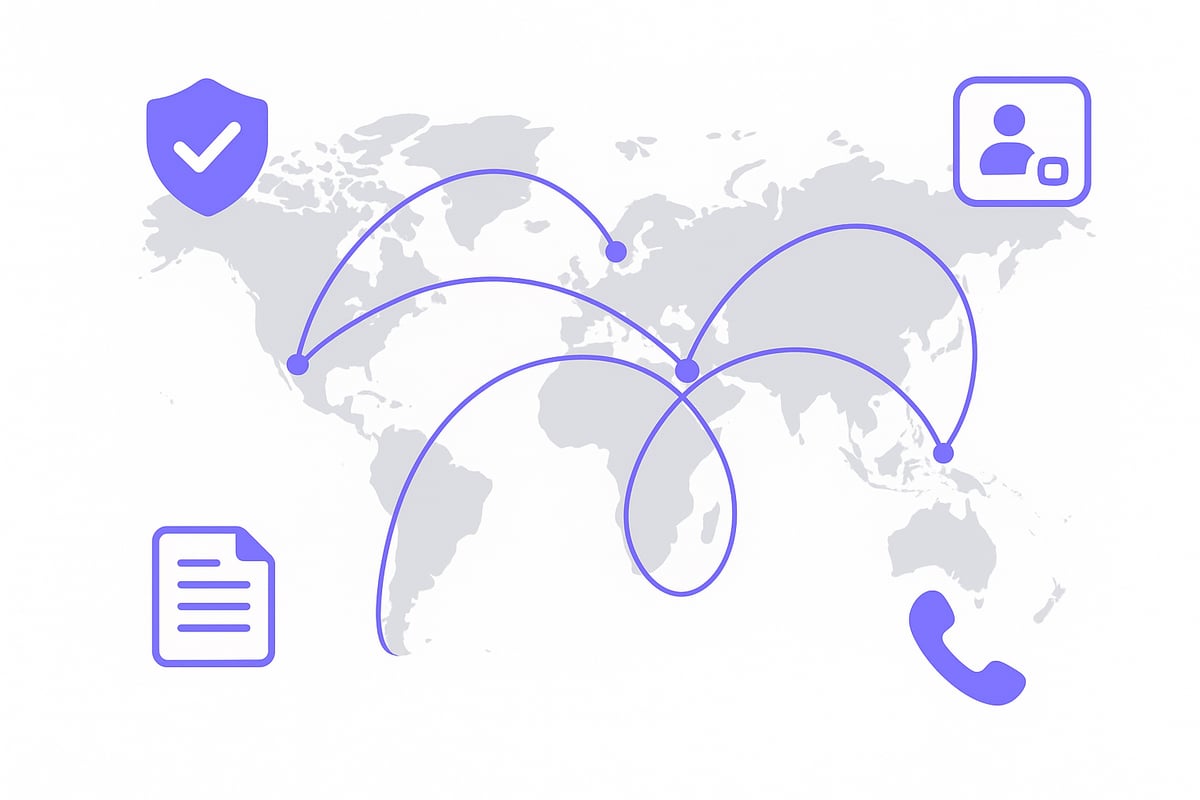
Every region has its own set of rules for a phone number for global communication. The International Telecommunication Union (ITU) sets standards, but each country adds its own requirements. For example, caller ID must comply with anti-spam laws like STIR/SHAKEN in the US and RCS in Europe. These protocols help prevent fraud and ensure that calls are trustworthy.
Emergency calling is another critical area. Regulations require that a phone number for global use must support local emergency access, even if the number is virtual or cloud-based. Businesses and individuals need to keep up with these evolving rules to avoid disruptions.
Here is a quick summary of key regulations:
Area | Requirement | Example Rule |
|---|---|---|
Caller ID | Anti-spam, authentication | STIR/SHAKEN, RCS |
Emergency Calling | Local access, compliance | 911, 112 support |
Data Protection | Privacy laws | GDPR, CCPA |
Staying informed about these standards ensures your phone number for global use remains compliant, secure, and functional.
Number Portability and Ownership
Number portability lets you move your phone number for global use between providers and sometimes across borders. This flexibility is vital for businesses and individuals who want to keep their identity consistent worldwide.
To port a number, you typically need to:
Submit proof of ownership (ID, contract)
Meet regional documentation requirements
Work with both old and new providers for verification
Challenges can include regulatory restrictions in certain countries or technical limitations between networks. Still, more regions are making portability easier, so owning and managing your phone number for global reach is getting simpler.
Compliance Pitfalls and How to Avoid Them
Mistakes in compliance can lead to service interruptions or even fines. Common pitfalls include:
Not updating documentation after moving countries
Missing required reports for business lines
Ignoring local spam and privacy laws
To avoid these issues:
Keep documentation current for your phone number for global use
Use provider dashboards to track compliance needs
Learn from real-world cases where businesses faced penalties
Preparation and ongoing attention help you avoid headaches and keep your communication seamless.
Future Regulatory Trends
Looking ahead, the regulatory landscape for a phone number for global use will continue to evolve. Digital identity and eSIM technology are reshaping how numbers are assigned and verified. By 2026, expect more rules around cross-border data flow and privacy, especially as eSIM adoption accelerates.
For a deeper understanding of how eSIM is changing the regulatory environment, check out eSIM phone numbers explained. As global and regional laws adapt, staying flexible and informed will be key for anyone relying on a phone number for global communication.
The Future of Global Communication: Trends, Technologies, and Predictions
The world of communication is evolving quickly, and by 2026, the way we think about a phone number for global use will be transformed. As technology advances, staying connected across borders becomes simpler, more secure, and more integrated into our daily lives.
The Rise of eSIM and Digital Identity
eSIM technology is changing the landscape for anyone who needs a phone number for global communication. Unlike traditional SIM cards, eSIMs let you switch providers and numbers digitally, making travel and remote work seamless. By 2026, over 70% of devices are expected to be eSIM-enabled, according to eSIM adoption trends and forecasts. This shift means users can easily manage multiple numbers and digital identities from one device. For global businesses, this flexibility supports expansion, privacy, and cost savings. The convenience of having a phone number for global use, integrated with digital ID, is quickly becoming the new normal.
AI, VoIP, and Unified Communication Platforms
Artificial intelligence is reshaping how we use a phone number for global connections. AI-powered call routing, real-time translation, and advanced spam filtering are making communication smoother and smarter. Unified communication platforms like Microsoft Teams, Zoom Phone, and RingCentral bring together voice, video, and messaging, all tied to your global number. VoIP technology allows calls to be made from anywhere, supporting remote teams and international collaboration. With these advances, a phone number for global users is more than just a number, it is a gateway to seamless, intelligent interactions.
The Role of 5G and Beyond
High-speed 5G networks are boosting the reliability and quality of every phone number for global communication. With lower latency and stronger connections, calls and messages reach their destination faster and clearer. 5G also enables new services, such as immersive video calls and real-time translation, even in remote or developing regions. Looking ahead, the arrival of 6G will further improve global connectivity, making it easier for everyone to maintain a phone number for global use, no matter where they are in the world.
Predictions for 2026 and Beyond
By 2026, we expect to see the convergence of eSIM, digital identity, and unified platforms, making a phone number for global use almost invisible behind seamless, identity-based communication. Digital wallets may soon include your global number, allowing for secure, instant setup. Businesses and individuals should prepare for a future where the traditional concept of phone numbers fades, replaced by secure, flexible digital identities that keep us connected wherever we go.
We’ve covered a lot together, from what makes a global phone number essential in 2026 to how eSIMs and smart connectivity are changing the way we stay in touch. If you’re ready to take control of your own global communication—without swapping SIM cards or worrying about surprise roaming fees—it might be time for us to try something smarter. With Umi, you get one eSIM that works in over 200 destinations and keeps you connected, simply and securely. Let’s see how it can make your travels and work seamless—Explore Umi's features.












" height="15.96587083656648px" id="gUt8q3MIs" width="13.557999603271485px"/></svg>)