Best eSIM for Japan: How Much Data You Need
Written By:
Umi

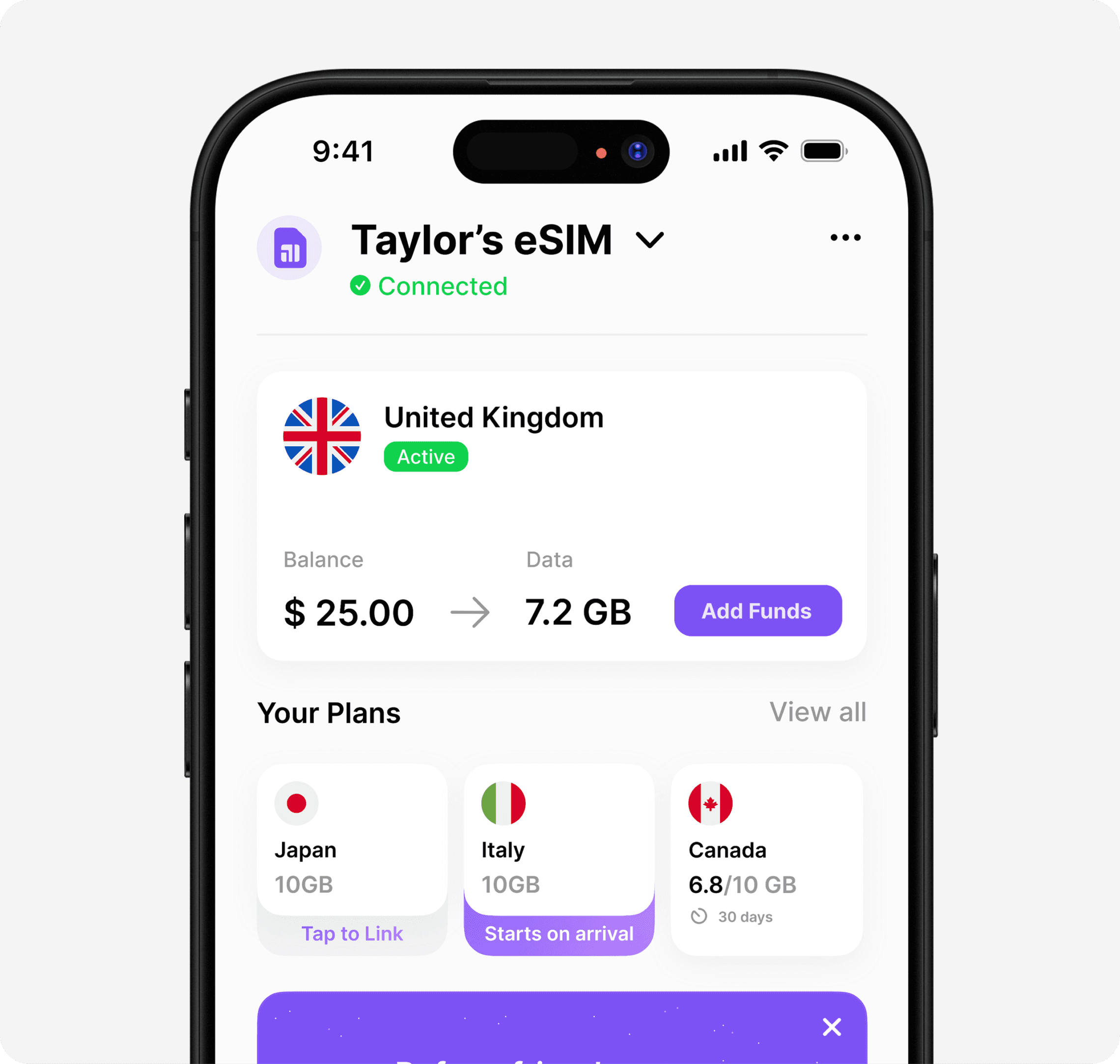
You land at Haneda, clear immigration, and want Google Maps working before you reach the train. The best eSIM for Japan gets you online in under a minute without a rental counter, a returns envelope, or a device to carry. Umi's Universal eSIM installs once, runs on premium 4G/5G across the country, and bills against a balance that never expires. This guide covers what to look for and, more usefully, how much data a Japan trip really needs.
Quick answer: For most visitors the best eSIM for Japan is one that installs in seconds, runs on a strong local network, and does not waste the data you paid for. Umi's Japan eSIM does all three: one Universal eSIM for the whole trip, premium 4G/5G, and a Flow balance that never expires, so leftover data follows you to your next country instead of vanishing at the airport.
What is the best eSIM for Japan?
The best eSIM for Japan is the one that gets you connected fastest, keeps you on a reliable network, and does not punish you for buying too much data. Japan has excellent mobile coverage in cities and along the main rail corridors, so network quality matters less than convenience and waste. Umi's Universal eSIM installs once in under 60 seconds, connects on premium 4G/5G that is never throttled, and runs off a Flow wallet balance that never expires.
That last point is the difference that adds up. Most travel eSIMs sell you a fixed bundle that dies on a set date. If your trip ends with 4GB unused, that money is gone. With Umi, the balance carries over, so the same eSIM is ready for Korea, Thailand, Turkey, or your next trip home.
Is it worth buying an eSIM for Japan?
Yes, for almost every visitor an eSIM is worth it. It removes the airport rental queue, the deposit, and the worry of returning a pocket-WiFi device on time. You install it before you fly and arrive already connected, which matters most in the first hour when you need maps, transit apps, and a translation tool.
An eSIM also scales to how you travel. Light users on hotel and café WiFi can top up a small balance and pay only for what they use. Heavier users who want maps and streaming all day can load a larger Plan. Either way, with Umi there is no separate eSIM to buy per country and no QR code to swap, because the same Universal eSIM covers 200+ destinations. To check that your handset supports it, see eSIM-compatible phones.
How much data do you need for a trip to Japan?
Most travellers need far less than they fear. Japan has widespread free WiFi in hotels, stations, and convenience stores, so your eSIM mainly covers maps, messaging, and the gaps in between. As a rough guide for a one-week trip:
Traveller type | Typical daily use | One week | Best Umi option |
|---|---|---|---|
Light: maps, chat, the odd search | ~0.5GB/day | 3–5GB | 5GB Plan or a small Flow top-up |
Moderate: maps, social, some video | ~1GB/day | 7–10GB | 10GB Plan |
Heavy: streaming, hotspot, video calls | ~2GB+/day | 15–20GB | 20GB Plan |
These are estimates, not promises. Your real use depends on how much you stream and how often you lean on free WiFi. The honest move is to start moderate. With Umi you are not locked in: if a Flow balance runs low you top up in the app in seconds, and any data you do not use never expires, so buying a slightly larger Plan is not money wasted.
How much does a Japan eSIM cost with Umi?
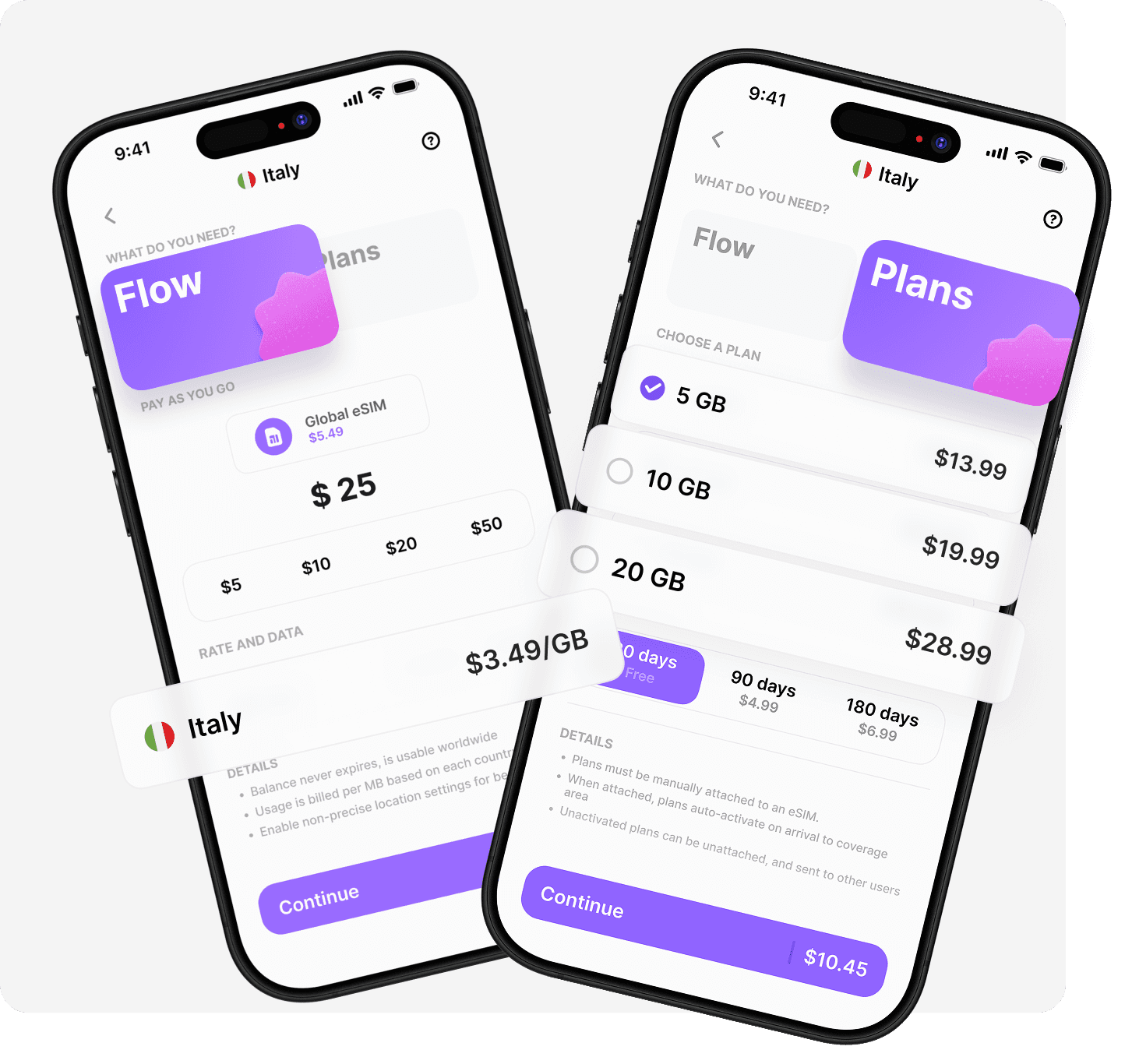
Umi gives you two ways to pay, and you can mix them. Flow is pay-as-you-go: you top up a wallet and draw it down as you use data, and the balance never expires. Plans are fixed prepaid bundles that work out cheaper per GB and take priority over your Flow balance while active.
Option | Price | Per GB | Notes |
|---|---|---|---|
Flow (pay-as-you-go) | $2.95/GB | $2.95 | Balance never expires, carries between trips |
5GB Plan | $14.55 | $2.91 | Good for a light week |
10GB Plan | $24.55 | $2.46 | Good for a moderate week |
20GB Plan | $41.95 | $2.10 | Popular; heavy use or two travellers |
50GB Plan | $89.55 | $1.79 | Long stays or a group |
All prices are in USD and were taken from the live Japan eSIM page on 1 September 2026; that page is the source of truth for the current rate. Plans are cheaper per GB than Flow, and the saving grows with the bundle size, but they only work within their coverage area and must be linked to your eSIM manually. Flow is the flexible fallback that keeps working wherever you go next.
eSIM vs pocket WiFi in Japan: which is better?
For solo and couple travel, an eSIM beats pocket WiFi on convenience and risk. Pocket WiFi means collecting a device, carrying and charging a second battery all day, and returning the unit on time or paying a penalty. An eSIM lives on the phone you already carry, switches on the moment you land, and has nothing to return.
Factor | Umi eSIM | Pocket WiFi rental |
|---|---|---|
Setup | Install once, under 60 seconds | Collect at counter or post |
Extra hardware | None | A device plus charger to carry |
Battery | Uses your phone | A second battery to keep charged |
Returns | Nothing to return | Return on time or pay a penalty |
Sharing | Unlimited hotspot to other devices | Shared by design |
Leftover value | Flow balance never expires | Nothing carries over |
Pocket WiFi still suits a family or group who want one connection across several devices on a tight budget. Umi answers that too: hotspot and tethering are unlimited, so one eSIM can share its connection with a partner's phone or a laptop. Note that "unlimited" hotspot means there is no separate tethering cap, not that data itself is uncapped, as you still draw from your balance or Plan. For the full breakdown, read pocket WiFi vs eSIM for travel.
Which SIM is best in Japan for foreigners?
For most foreign visitors, a travel eSIM beats a physical local SIM. A local SIM means finding a shop, showing ID, and sometimes navigating Japanese-only paperwork, and you are left with a SIM that only works in Japan. An eSIM you buy before you fly is ready on arrival and, with Umi, keeps working across 200+ destinations on the same profile.
This matters if Japan is one stop on a wider trip. Travellers pairing Japan and South Korea, or adding Thailand, do not need a new eSIM at each border with Umi. One Universal eSIM covers them all, and the Flow balance you topped up for Tokyo still works in Seoul. For the wider comparison across providers, see our guide to the best travel eSIM.
Is Airalo, Ubigi or Saily better for Japan?
Each of these is a credible travel eSIM, and Japan's strong networks mean most options give a decent signal in the cities. The real differences are in how they price data and what happens to what you do not use. Airalo sells a separate eSIM per country and its data expires on a set date. Saily, from the maker of NordVPN, leans on a budget price and built-in security but has thinner rural coverage as a newer entrant. Ubigi is a long-standing option with its own plan structure.
Where Umi stands apart is the combination: one Universal eSIM instead of a new one per country, premium 4G/5G that is never throttled, and a Flow balance that never expires so nothing you buy goes to waste. If you only ever visit Japan once and use a precise amount of data, a single-country bundle can work. If you travel more than once, or hate wasting data, the never-expiring balance is the deciding factor.
How do you set up a Japan eSIM?
Setup takes under a minute and happens entirely in the Umi app, before you leave home:
Check your phone supports eSIM (most models from the last few years do).
Download the Umi app and create an account.
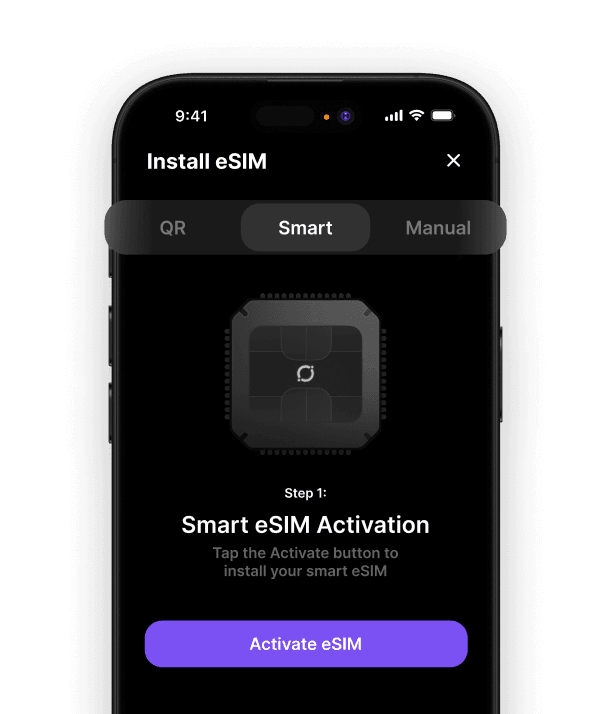
Install your Universal eSIM, which takes under 60 seconds.
Top up a Flow balance or add a Japan Plan that fits your week.
Switch on data roaming for the Umi line when you land, and you are connected.
There is no QR code to scan per country and no profile to delete later. For step-by-step help, Umi's setup guides walk through both iPhone and Android.
The best eSIM for Japan, in one line
For most visitors the best eSIM for Japan is one that installs in seconds, runs on premium 4G/5G, and never wastes the data you paid for. Umi's Universal eSIM does all three, and the Flow balance follows you to your next country instead of expiring at the gate. Start moderate, top up if you need more, and keep what you do not use.
Ready to land connected? Install your Universal eSIM and top up your Flow balance before you fly.












" height="15.96587083656648px" id="gUt8q3MIs" width="13.557999603271485px"/></svg>)